Pregabalin (Lyrica) Addiction in Pakistan: The Silent Epidemic Hiding in Plain Sight
Author: Dr. Obaid Ullah Khan | Consultant Psychiatrist, Federal City Rehab Clinic
Specialist in psychiatric assessment and treatment of anxiety disorders, prescription drug dependence, dual diagnosis, and complex withdrawal presentations. MBBS, FCPS (Psychiatry).
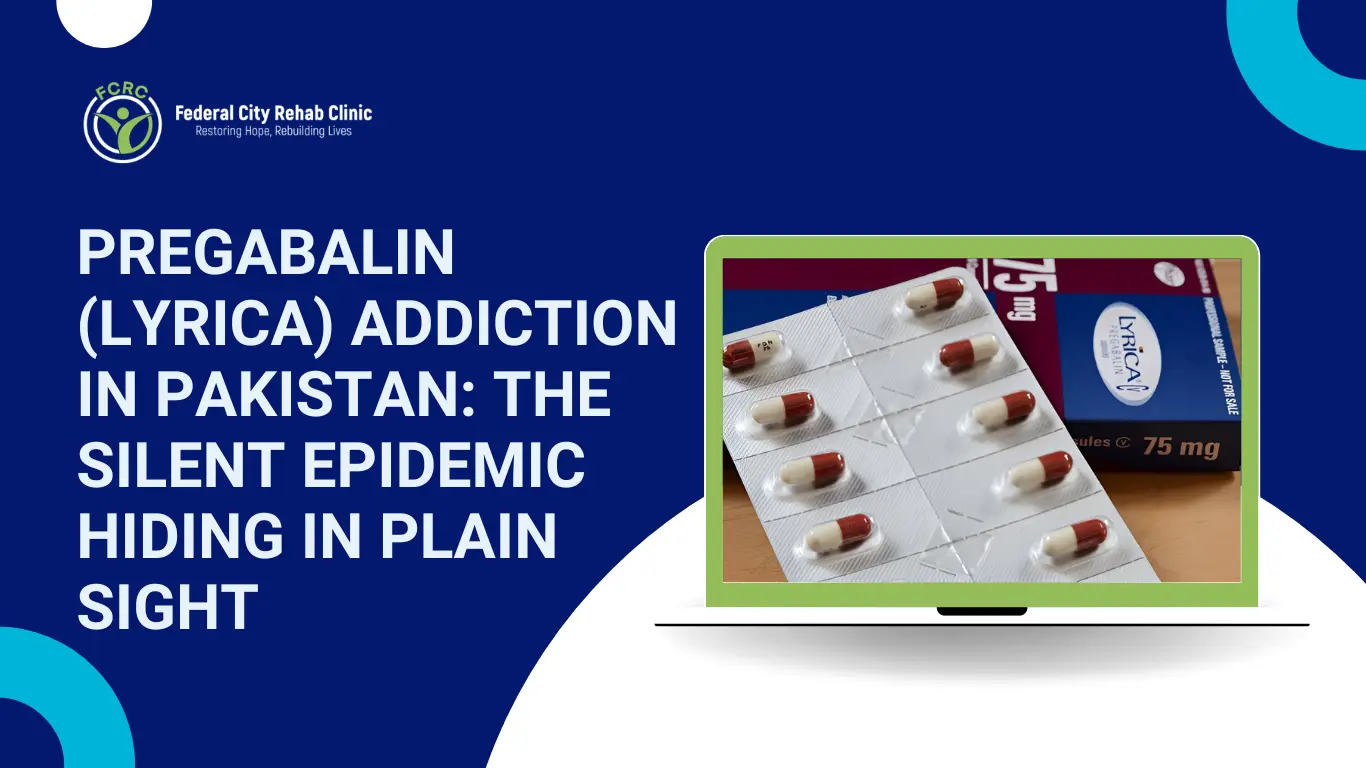
It does not look like a drug problem. The pills come in blister packs with a pharmacist’s label. They are prescribed — or at least, available without a prescription — for nerve pain, anxiety, epilepsy. The person taking them may be a professional, a student, or a housewife. They may not even know they are addicted until they try to stop and find they cannot.
Pregabalin — sold in Pakistan as Lyrica and several cheaper generics — is quietly becoming one of the country’s most serious addiction crises. And unlike heroin or crystal meth, it largely escapes public attention because it wears the respectable disguise of a prescription medication.
At Federal City Rehab Clinic, we are seeing more pregabalin-dependent patients every year. This article is our attempt to make this crisis visible — and to help patients and families understand what pregabalin addiction is, why it is so dangerous, and how it is treated.
What Is Pregabalin?
Pregabalin is an anticonvulsant and neuropathic pain medication belonging to the gabapentinoid drug class. It works by binding to calcium channels in the brain and nervous system, reducing the release of excitatory neurotransmitters. Clinically, it has legitimate uses: it is prescribed for epilepsy, fibromyalgia, generalised anxiety disorder, and nerve pain conditions such as diabetic neuropathy and post-herpetic neuralgia.
The problem is that at higher doses, pregabalin also produces sedation, euphoria, and a dissociative calm that some people find profoundly appealing — particularly those already struggling with anxiety, emotional pain, or other substance use. This combination of medical legitimacy and recreational potential makes it unusually difficult to regulate and unusually easy to abuse.
In Pakistan, pregabalin is available under brand names including Lyrica (the original Pfizer product), Pregab, Neugaba, and several other generics. For years it was available over the counter at many pharmacies. Islamabad’s Quality Control Board formally flagged this in communications to DRAP (Drug Regulatory Authority of Pakistan), describing pregabalin as the “new Valium” and urging its reclassification to a controlled schedule — a process that has moved slowly.
The Scale of the Problem in Pakistan
“Reports from field surveillance and drug inspectors reveal an alarming increase in the sale and misuse of pregabalin. These drugs, often treated as over-the-counter medications, are easily accessible to potential abusers, enabling widespread addiction.” — Islamabad Quality Control Board, communication to DRAP
Pakistan currently has no nationally representative prevalence data on pregabalin misuse — a gap that itself reflects how under-recognised the problem remains. What we do have is clinical evidence, field surveillance reports, and the lived reality witnessed in treatment settings.
Islamabad’s Quality Control Board has formally communicated to DRAP that pregabalin misuse is occurring at alarming rates, particularly among young adults. Field reports from drug inspectors confirm that the drug is being sold without prescription and diverted toward recreational use. Research published in Pakistani medical literature has identified pregabalin as increasingly common among polydrug users — especially those who use heroin or other opioids, where it is used to amplify or substitute the opioid effect.
Globally, the pattern mirrors what Pakistan is now experiencing: between 2008 and 2018, pregabalin and gabapentin use surged by 60 percent in many countries, with the drugs implicated in hundreds of overdose deaths when combined with opioids or alcohol. Pakistan appears to be following this trajectory with a delay — but the trajectory is the same.
Who Is at Risk?
Pregabalin dependency does not have a single profile. In our clinical experience at FCRC, we see it across a wide range of patients:
Patients with legitimate prescriptions
Many patients begin taking pregabalin appropriately — for genuine anxiety, nerve pain, or epilepsy — and find over time that the dose needs to increase to achieve the same effect. Tolerance develops silently. What started as 75mg twice daily becomes 300mg, then 600mg, then more. The patient is not “getting high”; they are medicating real symptoms. But the dependency is real and the withdrawal will be severe.
Young people seeking relief from anxiety and stress
Pakistan is experiencing a significant unmet need in mental health treatment. Many young people — university students, young professionals — discover that pregabalin quiets the anxiety, takes the edge off social situations, and helps them function. The appeal is real. So is the dependence that follows. Research has identified pregabalin as particularly popular among young adults who describe themselves as unaware of its addiction potential when they first began using it.
Polydrug users
Among those already using opioids such as heroin or tramadol, pregabalin is frequently used to enhance the high, manage withdrawal symptoms between doses, or substitute when the primary drug is unavailable. This polydrug use pattern is clinically dangerous because pregabalin combined with opioids creates a compounded risk of respiratory depression — one of the leading causes of accidental overdose death.
People self-medicating trauma or emotional pain
The sedating and dissociative properties of high-dose pregabalin make it attractive to people carrying unresolved trauma, grief, or emotional distress. This is particularly relevant in a cultural context where mental health help-seeking carries stigma: pregabalin offers a pharmacological escape that is easier to access than a psychiatrist.
Signs and Symptoms of Pregabalin Addiction
Recognising pregabalin dependency can be difficult, especially because the drug is often taken openly and legitimately. The following signs should prompt concern:
Escalating doses
- Taking more than the prescribed amount, or taking it more frequently than prescribed
- Visiting multiple pharmacies or doctors to obtain additional supplies
- Obtaining pregabalin without a prescription
Behavioural and psychological changes
- Sedation, slurred speech, poor coordination — particularly at higher doses
- Memory problems or cognitive slowing
- Mood swings — euphoric when using, irritable or anxious when due for the next dose
- Social withdrawal and declining interest in responsibilities
- Continued use despite awareness of negative consequences
Physical signs
- Dizziness and blurred vision
- Weight gain (a known side effect of pregabalin that often worsens with higher doses)
- Tremors or unsteady gait
- Fatigue and hypersomnia
Withdrawal signs — a key diagnostic indicator
Withdrawal from pregabalin is perhaps the clearest sign that physical dependence has developed. It can begin within hours of the last dose and includes:
- Severe anxiety and panic attacks
- Insomnia and vivid, disturbing nightmares
- Sweating, tremors, and nausea
- Seizures — particularly at high doses or with abrupt cessation
- Psychosis and perceptual disturbances in severe cases
The severity of pregabalin withdrawal is frequently underestimated — including by patients who do not recognise that their symptoms are withdrawal rather than a return of the original condition. The emergence of seizures during unmanaged withdrawal makes this a medical emergency that requires supervised detoxification, not a self-managed process at home.
Why Pregabalin Withdrawal Is Medically Dangerous
Attempting to stop pregabalin abruptly without medical supervision can be life-threatening. Withdrawal seizures can occur, as can psychosis and severe cardiovascular instability. At FCRC, every pregabalin detoxification is conducted under 24-hour medical monitoring.
Pregabalin acts on the same calcium channels targeted by alcohol — which is why its withdrawal syndrome shares characteristics with alcohol withdrawal, including the risk of potentially fatal seizures. Patients and families often do not appreciate this risk because they associate seizure risk with “harder” drugs.
The risk is compounded in patients who use pregabalin alongside opioids or benzodiazepines, where multiple simultaneous withdrawal syndromes require carefully staged medical management. Self-managed detoxification in this context is not safe. At FCRC, our medical team — led by consultant psychiatrists with specialist addiction training — develops individual withdrawal protocols for each patient, using evidence-based tapering regimes and symptomatic medications to manage the process safely.
The FCRC Approach to Pregabalin Treatment
Pregabalin dependency is a medical condition that requires comprehensive, clinically supervised treatment. At Federal City Rehab Clinic, our programme for pregabalin-dependent patients encompasses the following phases:
Phase 1: Clinical assessment
A thorough psychiatric and addiction assessment establishes the nature and severity of dependence, identifies co-occurring mental health conditions (particularly anxiety disorders and depression, which frequently underlie pregabalin misuse), and determines the presence of polydrug use that will require integrated management.
Phase 2: Medical detoxification
Supervised withdrawal is managed through a structured, individualised tapering protocol. Where pregabalin was being used at very high doses, this process may be gradual — over several weeks — to prevent withdrawal seizures and manage rebound anxiety safely. Our medical team monitors patients continuously during this phase.
Phase 3: Dual diagnosis treatment
Because pregabalin misuse so frequently co-occurs with anxiety disorders, depression, trauma, and other mental health conditions, effective treatment requires addressing the underlying need the drug was meeting. Our consultant psychiatrists provide evidence-based pharmacological and psychological dual treatment for the underlying condition — replacing pregabalin with appropriate, non-addictive alternatives where medication is needed.
Phase 4: Psychological therapy
Individual and group psychotherapy forms the core of recovery. Cognitive Behavioural Therapy (CBT), Dialectical Behaviour Therapy (DBT), and trauma-focused therapies help patients build the psychological skills needed to manage anxiety, emotional pain, and cravings without returning to substance use.
Phase 5: Family engagement and aftercare
Addiction affects the entire family system. Our programme actively involves family members — with appropriate consent — in the recovery process. Aftercare planning, relapse prevention, and ongoing outpatient psychiatric support provide continuity beyond the residential treatment phase.
A Note to Families
If someone you love is dependent on pregabalin, you are likely carrying a weight that is difficult to describe. You may have watched them become a different person — sedated, irritable, disengaged. You may have discovered hidden pill packets, unexplained pharmacy visits, or a prescription that never seems to last as long as it should.
You are not alone, and this is not a moral failure — on their part or yours. Pregabalin dependency is a medical condition with biological roots, and it responds to evidence-based treatment.
FCRC’s family consultation service allows you to speak with a clinician — confidentially and without commitment — to understand what your loved one may be experiencing and what options are available. Please reach out. The earlier treatment begins, the better the outcomes.
Frequently Asked Questions
Is pregabalin addiction real? My doctor prescribed it.
Yes. Pregabalin can cause physical dependence and addiction even when taken as prescribed, particularly at higher doses or over extended periods. The fact that a doctor prescribed it does not protect against dependence. If you or a family member is experiencing withdrawal symptoms when trying to reduce or stop the medication, that is a sign of physical dependence that should be evaluated by a specialist.
Can I stop pregabalin on my own?
We strongly advise against abrupt self-cessation, particularly at higher doses or if you have been using pregabalin for an extended period. Withdrawal seizures are a documented risk. Please contact FCRC or another qualified medical provider before attempting to reduce or discontinue pregabalin.
How long does pregabalin treatment take?
This depends on the severity of dependence, the presence of co-occurring conditions, and the patient’s circumstances. Medical detoxification alone may take two to four weeks for high-dose dependence. A comprehensive residential programme typically runs 30 to 90 days, followed by outpatient aftercare.
Is treatment confidential?
Absolutely. FCRC maintains complete confidentiality for all patients. No information is shared with employers, family members, or any external party without the explicit written consent of the patient. Our location in the secluded hills of Bani Gala provides additional privacy.
Does FCRC treat pregabalin dependency in women?
Yes. FCRC has a dedicated female rehabilitation programme with female clinical staff and a separate treatment environment designed to meet the specific needs of women in treatment.
Conclusion
Pregabalin addiction is not a fringe issue. It is a growing, underdiscussed crisis affecting people across Pakistan’s cities and social strata — people who often do not recognise themselves as having an addiction because the substance that has held them came in a labelled blister pack.
The good news is that pregabalin dependency is treatable. With the right clinical support — safe medical detoxification, treatment of underlying mental health conditions, and psychological therapy — sustained recovery is achievable.
At FCRC, we are ready to help. If you have concerns about your own use of pregabalin, or that of a family member, please contact us. Our team is available 24 hours a day, seven days a week, for a confidential consultation.