Female Addiction in Pakistan: Breaking the Silence Around Women and Substance Use
Author: Abrar Ahmad | CEO & Clinical Psychologist, Federal City Rehab Clinic
Doctoral-level clinical psychologist specialising in addiction, trauma, and gender-sensitive rehabilitation. Founder of FCRC’s female rehabilitation programme.
When people in Pakistan picture an addict, they rarely picture a woman. The mental image is almost always male: a young man in a bad neighbourhood, a laborer with a heroin habit, a student who fell in with the wrong crowd. Women do not appear in that picture, because women are not supposed to have this problem.
But they do. And the silence around female addiction in Pakistan is not evidence of its absence. It is evidence of how completely it has been hidden.
Research published in the Journal of Ethnicity in Substance Abuse in 2026 found that women with substance use disorder in Pakistan face three interconnected layers of barriers to help-seeking: cultural and religious barriers, institutional and structural limitations, and interpersonal challenges. The result is that women suffer for longer, in deeper isolation, and with less clinical support than their male counterparts.
This article is written to break that silence. To name what is happening, to describe what female addiction in Pakistan actually looks like, and to make it clear that treatment is available, effective, and delivered at FCRC with the confidentiality and dignity that this subject demands.
What Substances Are Pakistani Women Addicted To?
The pattern of female substance use in Pakistan differs from the male pattern. Research from the Pakistan Medical Association found that females show a higher tendency toward benzodiazepine dependency due to greater pharmacy accessibility, while male users present more commonly with heroin, cannabis, and other illicit substances. Prescription drug dependency in women is therefore the single largest category of female addiction in Pakistan, and also the most hidden because it wears the respectable mask of a doctor’s prescription.
Benzodiazepines and sedatives
Valium, Lexotanil, Xanax, and their generics are widely available in Pakistan with or without prescription. Women dealing with anxiety, insomnia, marital stress, or domestic pressure are frequently prescribed or self-medicate with these drugs. The dependency builds quietly over months. When women try to stop, the withdrawal is severe and the medical risk is real. By that point, many have been using for years without any family member knowing the extent of the problem.
Tramadol and prescription opioids
Tramadol is prescribed extensively in Pakistan for pain management and is widely available. Women managing chronic pain conditions, including the aftermath of childbirth, gynaecological conditions, or injuries, are vulnerable to tramadol dependency. The transition from medical use to dependency can be gradual and unrecognised.
Cannabis
While cannabis use is less common in Pakistani women than in men, it is not absent. Urban, educated women, in particular, are increasingly represented among cannabis users, often using it for stress and anxiety management in contexts where alcohol is unavailable and benzodiazepines feel too clinical.
Alcohol
Female alcohol dependency exists in Pakistan and is among the most deeply concealed addiction patterns in the country. The religious and cultural weight of alcohol use for women in Pakistan is so severe that most women with alcohol dependency will not disclose it to family members, doctors, or anyone else until a point of acute crisis.
Why Female Addiction Is So Hidden in Pakistan
The 2026 Tandfonline research identified that for Pakistani women, stigma and shame operate as primary barriers to help-seeking, specifically through two mechanisms: externalized stigma from the community and internalized shame within the woman herself. Both work together to maintain silence.
The family reputation barrier
A woman’s addiction is experienced by her family not as her medical problem but as the family’s shame. The pressure to conceal it to protect izzat means that family members who discover the problem are often as determined to keep it hidden as the woman herself. Treatment is resisted not because the family does not love her, but because they believe exposure would be more damaging than continued suffering in silence.
Fear of marriage and family consequences
For unmarried women, disclosure of addiction creates fears about marriage prospects. For married women, the fear of divorce or custody of children is a powerful barrier. These are not irrational fears in Pakistan’s current social reality. They are real risks, and the clinical approach to female addiction treatment must acknowledge and address them rather than dismiss them.
Lack of female-appropriate treatment options
Many Pakistani rehabilitation facilities are not set up to treat women at all. Mixed-gender facilities, male clinical staff, and programmes designed around male addiction patterns do not serve female patients appropriately. The absence of female-appropriate treatment has historically meant that women who were willing to seek help had nowhere to go. This is one of the reasons FCRC’s dedicated female programme was established.
The Signs of Female Addiction Pakistani Families Miss
Because female addiction is expected not to exist, its signs are frequently misattributed. The following signs in a female family member warrant serious consideration:
- Unexplained prescription use: Empty blister packs of sedatives or painkillers, visits to multiple doctors or pharmacies, requests for medications that seem excessive relative to the stated condition.
- Mood and personality changes: Unusual sedation, slurred speech, uncharacteristic aggression or irritability, or a significantly altered emotional baseline that the family attributes to stress or hormonal changes.
- Withdrawal from family and social responsibilities: Declining engagement with domestic responsibilities, children’s education, family gatherings, or religious practice.
- Concealment and defensiveness: A reaction of unusual defensiveness when certain topics or spaces are approached. Locked drawers, hidden items, and secretive behaviour around medication.
- Physical changes: Significant weight change, deteriorating physical appearance, or unexplained health complaints that do not resolve.
- Anxiety or physical symptoms when medication is unavailable: Shaking, sweating, extreme agitation, or complaints of severe pain or insomnia when access to a substance is interrupted.
FCRC’s Female Rehabilitation Programme
FCRC’s dedicated female rehabilitation programme was established in recognition of the specific clinical, cultural, and personal dimensions of addiction in Pakistani women. It is not a modified version of the male programme. It is a purpose-built approach with its own clinical team, residential environment, and therapeutic framework.
Female clinical staff
All clinical contact within the female programme is conducted by female staff. Female patients are assessed, treated, and supported by women who understand both the clinical dimensions of addiction and the cultural context in which Pakistani women develop and sustain it.
Separate residential environment
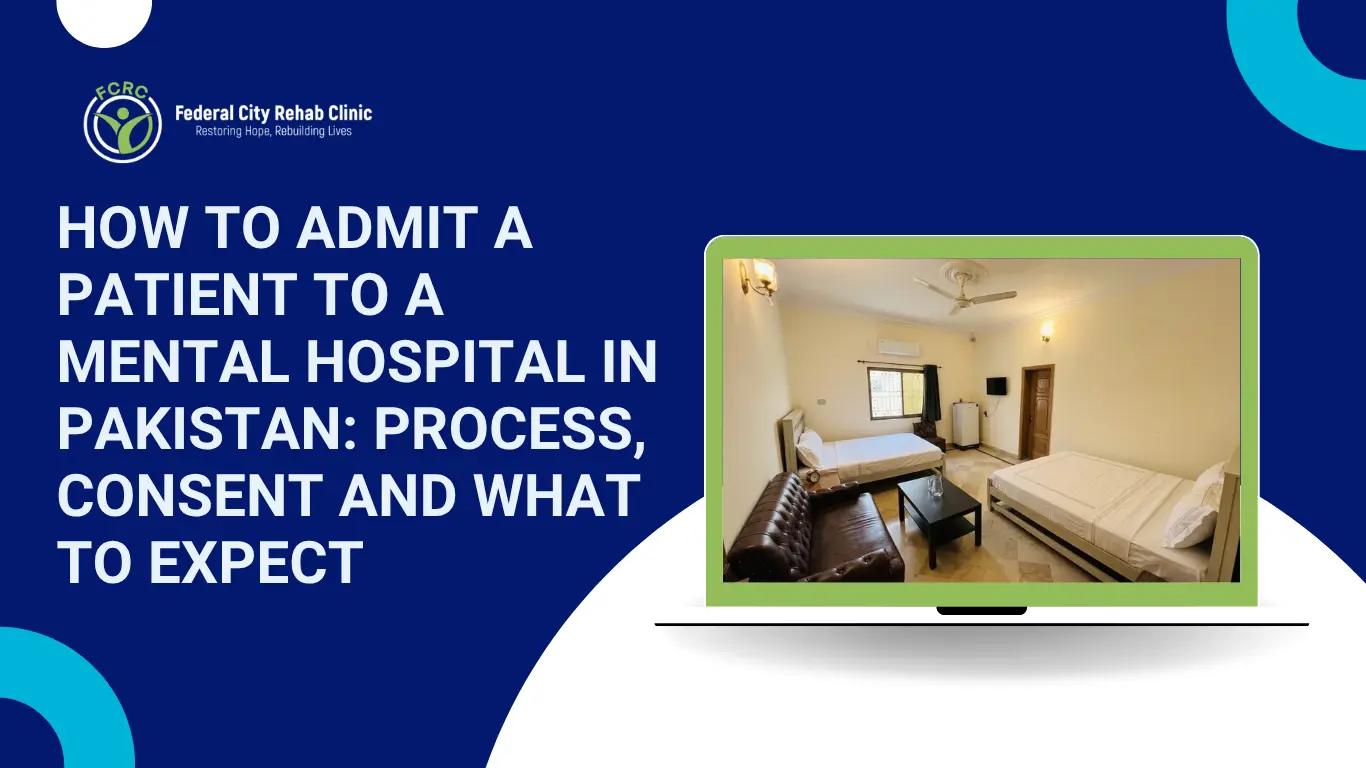
Female patients are housed in a completely separate residential environment with full privacy from the male programme. The facility provides a secure, comfortable, and dignified living environment in which women can focus entirely on recovery.
Trauma-informed care
Research consistently documents the high rates of trauma, domestic violence, and adverse life events among women with substance use disorder in Pakistan. FCRC’s female programme integrates trauma-informed care as a core component, not an optional add-on. This means addressing what the substance was managing, not only the substance itself.
Family system work
Recovery for a Pakistani woman cannot be separated from her family system. FCRC’s female programme includes structured family engagement, with the goal of addressing the family dynamics that both preceded and sustained the dependency, and creating a home environment that supports rather than undermines recovery.
A Direct Message to Women Reading This
If you are a woman reading this and you recognise yourself in what you have read, please know this: what you are experiencing is a medical condition, not a moral failure. It is treatable. And seeking treatment is not an act of weakness or disgrace. It is one of the most courageous things you can do.
You do not have to tell your whole family before you call us. You can call us yourself, speak to a female clinician in complete confidence, and understand your options before deciding what to do next. Nothing goes any further without your consent.
Our team is available around the clock. Call or WhatsApp us on 0330 1454321. You can also visit contact us page to reach us.