Heroin Addiction in Pakistan: Causes, Effects, and the Road to Recovery
Author: Abrar Ahmad, CEO, Federal City Rehab Clinic. Consultant Clinical Psychologist and Addiction Therapist. Chartered Member, Psychological Society of Ireland.
Heroin addiction has been part of Pakistan’s addiction landscape for longer than almost any other substance. It has destroyed lives across generations, cost families everything they had, and left a trail of grief that touches communities in every province. Yet despite how long it has been with us, heroin remains widely misunderstood, often discussed in moralistic terms rather than medical ones, and frequently treated with approaches that do not produce lasting recovery.
If you are reading this because someone you love is using heroin, you are likely exhausted. You may have tried to help in every way you know how. You may have begged, threatened, supported, distanced, and tried again. You may be wondering whether anything will ever work, or whether the person you knew is gone for good.
They are not. Heroin addiction is a treatable medical condition. Recovery is real, even from severe and long-standing dependency, when the right clinical approach is used. This guide is written to help you understand what you are dealing with, what heroin actually does, and what genuine recovery looks like in the Pakistani context.
If you would like to speak with someone now, FCRC’s admissions team is available 24 hours a day. The conversation is completely confidential and commits you to nothing.
What is Heroin?
Heroin is a powerful opioid drug derived from morphine, which is itself derived from the opium poppy. Most of the world’s heroin originates from Afghanistan, and according to the United Nations Office on Drugs and Crime, Pakistan sits along one of the world’s busiest heroin trafficking routes. This geographic reality has shaped the country’s relationship with the drug for decades.
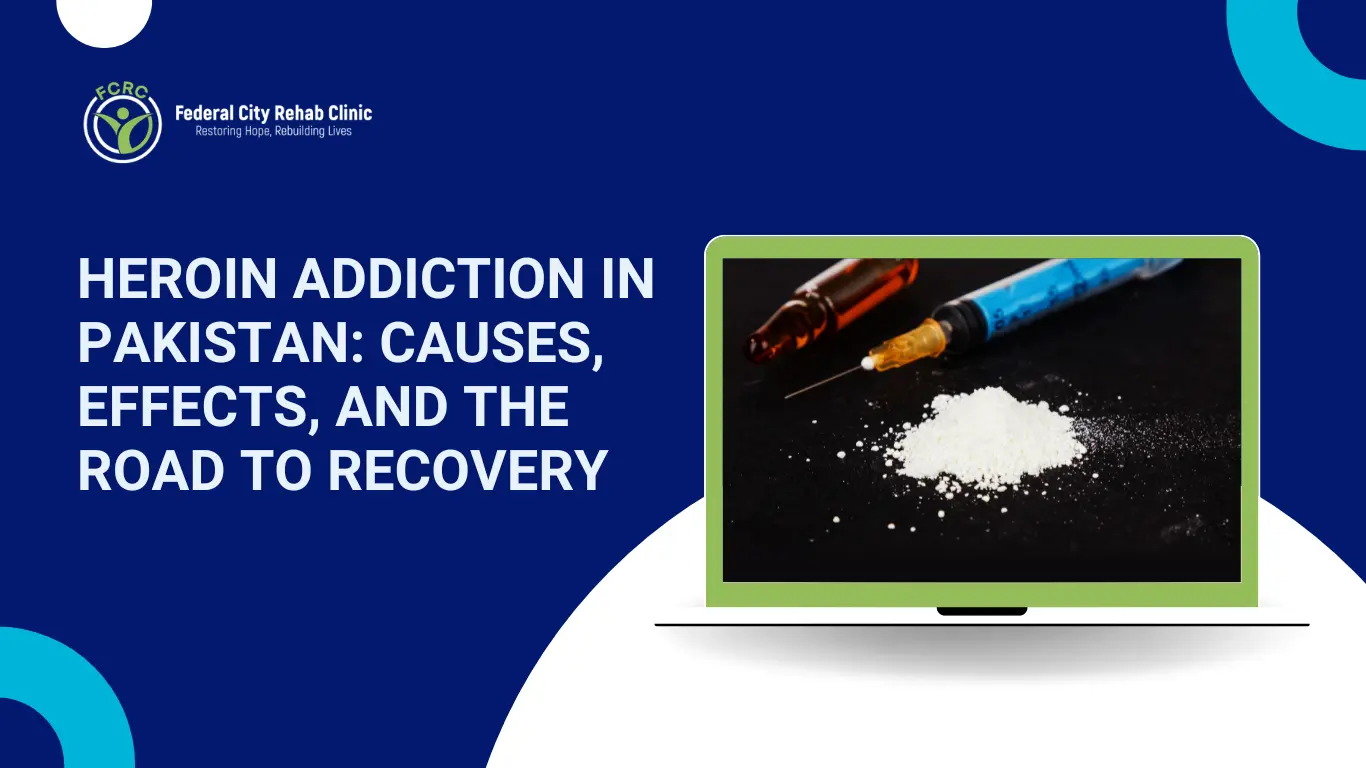
Heroin is typically sold as a brown or white powder and is most commonly smoked, snorted, or injected. It works by binding to opioid receptors in the brain, producing a powerful and rapid sense of euphoria, followed by a deep state of sedation and emotional numbing. The intensity of this effect, and the speed at which the brain adapts to the drug, is what makes heroin so dangerously addictive.
Why Heroin Causes Addiction So Quickly
Understanding why heroin produces dependency so rapidly helps families let go of the question of whether their loved one simply lacks willpower. The neurological reality is far more specific than that.
The brain has its own opioid system that produces natural chemicals responsible for pain relief, pleasure, and emotional stability. According to the National Institute on Drug Abuse, heroin floods this system with chemical activity at levels far beyond anything the brain produces naturally. The result is an overwhelming reward signal that the brain registers as profoundly important and worth repeating.
With repeated use, the brain adapts. Natural opioid production reduces. The receptors that responded so powerfully to the first doses become less sensitive. The person now needs heroin not for pleasure but to feel normal, to function, to avoid the physical and emotional collapse that follows when the drug leaves their system.
This is the trap. The same neurobiological mechanism that makes heroin feel like rescue in the early weeks makes it feel like survival within months. By the time the person realises what has happened, the brain has been fundamentally rewired around the drug. Willpower has very little to do with it.
Causes of Heroin Addiction in Pakistan
People do not begin using heroin in a vacuum. There are specific patterns that emerge again and again in the histories of patients we treat at FCRC, and understanding them helps both prevention and treatment.
Geographic and Economic Reality
Pakistan’s proximity to Afghanistan and its position on heroin trafficking routes mean that supply has always been abundant. In communities where employment is scarce, education is limited, and economic prospects feel bleak, heroin is often more available and more affordable than alternatives. This is particularly true across parts of Khyber Pakhtunkhwa, certain districts of Punjab, and the urban margins of Karachi and Lahore. Geography is not destiny, but it is a meaningful factor.
Untreated Mental Health
A significant proportion of patients we treat for heroin dependency began using it to manage psychological pain that had never been diagnosed or addressed. Depression, anxiety, post-traumatic stress, and grief are among the most common underlying drivers. In a country where mental health services are limited and the stigma around seeking psychiatric care remains significant, heroin becomes the available answer to a problem the person cannot name. This is one of the reasons why dual diagnosis treatment is so central to genuine recovery.
Trauma
Adverse experiences in childhood and adulthood are strongly associated with later substance use. Physical abuse, sexual abuse, the loss of a parent, exposure to violence, and prolonged stress all increase vulnerability to opioid addiction specifically, because of heroin’s particular capacity to numb emotional pain. Patients with significant trauma histories often describe heroin not as something that made them feel good, but as something that finally made them stop feeling.
Peer Environment
Heroin use rarely begins alone. It almost always begins within a peer environment where the drug is present, normalised, and offered. Young men in particular are vulnerable to introduction through friend groups, especially in contexts where boredom, unemployment, and a sense of purposelessness combine.
Prescription Opioid Pathway
Some patients in Pakistan develop heroin dependency after first becoming dependent on prescription opioids, including tramadol. When the prescription source becomes unavailable or insufficient, heroin offers a more potent and often cheaper alternative. This pathway is increasingly common as prescription drug dependency grows across Pakistan.
The Effects of Heroin on the Body and Mind
Heroin causes damage at every level of human functioning. Understanding what it does helps families recognise what they are seeing and helps patients recognise what they are losing.
Physical Effects
The acute effects of heroin include profound sedation, slowed breathing, constricted pupils, nausea, severe constipation, and dry mouth. These are visible to families even when use is being concealed.
With sustained use, the physical toll deepens. Significant weight loss is common because heroin suppresses appetite. The skin takes on a sallow, grey appearance. Veins become damaged in patients who inject. Dental health deteriorates. Immune function weakens, increasing susceptibility to infection. The risk of overdose is constant and rises with every period of abstinence followed by relapse, because tolerance reduces during the abstinent period and the dose that was previously manageable can become fatal.
For patients who inject heroin, the additional risks are severe. According to the World Health Organization, injection drug use carries elevated risk of HIV, hepatitis B and C, and serious bacterial infections including endocarditis. These are real medical consequences that require comprehensive medical attention alongside addiction treatment.
Psychological Effects
The psychological impact of heroin is more complex and often more devastating than the physical. Heroin produces emotional numbing as part of its core effect, which initially feels like relief from pain but progressively flattens the entire emotional range. Joy, love, ambition, curiosity, and hope all dim alongside the painful emotions the drug was being used to manage.
Depression deepens with sustained use, partly through neurological mechanisms and partly through the accumulating losses that addiction produces. Anxiety often increases. Memory and concentration suffer. The sense of self contracts until the drug becomes the centre around which everything else organises.
The Family Impact
Heroin does not destroy only the person using it. It dismantles families, slowly and completely. Parents lose sleep. Spouses live in fear. Children grow up in homes shaped by their parent’s addiction, learning to be quiet, learning to be small, learning that home is not a safe place to relax. The financial cost is enormous. Trust collapses. Honesty disappears. The relationships that should be a source of healing become casualties of the disease.
This is why family therapy is not optional in serious heroin treatment. Recovery has to include the people who have been wounded alongside the patient.
If you recognise your family in this description, you are not alone, and help exists. Speak to FCRC’s admissions team for a confidential, no-obligation conversation.
What Real Recovery from Heroin Looks Like
There is a particular kind of pain that comes from loving someone who has tried to stop using heroin, succeeded for a few days or weeks, and then relapsed. It is exhausting, and it teaches families to expect failure even when they want to hope. So before describing what recovery involves, it is worth saying clearly that lasting recovery from heroin is genuinely possible. We see it at FCRC. It happens with the right approach, the right environment, and the right time.
Medically Supervised Detoxification
Recovery begins with detoxification. Heroin withdrawal is not typically life-threatening in healthy patients, but it produces a withdrawal syndrome so intensely uncomfortable that almost no one manages it successfully without clinical support. Severe muscle pain, nausea, vomiting, diarrhoea, intense restlessness, sleeplessness, and overwhelming psychological distress define the experience. The body begs for relief, and the only thing that immediately provides it is the drug itself. This is why unsupervised attempts to stop almost always fail within days.
Medically supervised detoxification manages this period clinically. Withdrawal symptoms are reduced through evidence-based medication protocols. The patient is kept as comfortable as the situation allows. Medical staff are present continuously to address complications. The detox phase typically lasts five to ten days, after which the patient is physically stable and ready for the deeper therapeutic work.
The Therapeutic Programme
Detox alone is not treatment. It is the foundation on which treatment is built. The actual recovery work happens in the weeks and months that follow, through evidence-based psychological therapy that addresses the patterns sustaining addiction.
Cognitive Behavioural Therapy helps patients identify the thoughts, emotions, and situations that trigger drug use, and build practical strategies for managing them. Trauma-informed therapy addresses the underlying experiences that drive heroin use in many patients, conducted carefully and at the patient’s pace. Group therapy creates peer connection and accountability within a facilitated, safe environment. Motivational interviewing strengthens the patient’s own commitment to recovery. Family therapy involves loved ones in the recovery process and helps repair what addiction has damaged.
This combination is the actual treatment. It is what changes people. Medication-assisted detox without therapeutic depth produces clean blood tests and predictable relapse. Detox combined with sustained therapeutic work produces real recovery.
Dual Diagnosis Treatment
A significant proportion of heroin patients have a co-occurring mental health condition that has been driving their use. Treating the heroin without addressing the underlying depression, anxiety, PTSD, or other condition leaves the original problem intact and almost guarantees relapse. FCRC’s dual diagnosis programme addresses both simultaneously, within an integrated clinical framework, because this is what the evidence supports and what works.
Residential Treatment
For moderate to severe heroin dependency, inpatient residential rehabilitation is strongly recommended. The reason is straightforward. The environments, social networks, and routines associated with heroin use are powerful relapse triggers. The brain has been conditioned over months or years to respond to specific people, places, and contexts with craving. Removing the patient from those triggers entirely, for a defined period, allows the therapeutic work to take hold without constant interference.
FCRC’s residential programme is delivered in the peaceful hills of Bani Gala, Islamabad, in an environment that is naturally calm, completely private, and removed from urban triggers. Programme durations are 30, 60, and 90 days, with extended care available for complex cases. Research consistently supports longer programmes for heroin dependency specifically, because the neurological recovery from sustained opioid use takes time.
Aftercare and Relapse Prevention
Recovery does not end on the day the patient leaves the facility. The weeks following discharge are among the most vulnerable in the entire journey, and a structured aftercare programme is what protects against relapse during this period. Every patient at FCRC leaves with a personalised plan covering their specific triggers, coping strategies, and follow-up support. The clinical team remains available after discharge, because relationships with patients do not end when a programme finishes.
Why Earlier Treatment Produces Better Outcomes
A pattern that families often miss is how much earlier intervention matters. Every additional year of heroin use accumulates further neurological damage, deepens the dependency, complicates the picture with secondary medical and psychiatric problems, and makes the recovery process longer and harder.
This is not a reason for despair if your loved one has been using it for years. People with long heroin histories recover all the time at FCRC. But it is a reason not to wait, not to assume the situation will resolve itself, and not to accept the slow normalisation of a problem that demands serious clinical attention.
If your family is at the point of recognising that something needs to change, that is the right moment to act. Reach out to FCRC’s admissions team for a confidential conversation about what is possible.
Frequently Asked Questions
How long does heroin addiction treatment take?
For moderate to severe heroin dependency, residential programmes of 60 to 90 days are typically recommended, with extended care available for complex cases. The medically supervised detoxification phase usually takes five to ten days, after which the therapeutic programme continues. Longer programmes are consistently associated with better long-term outcomes for heroin recovery.
Is heroin withdrawal dangerous?
Heroin withdrawal is not typically life-threatening in healthy patients, but it is severely uncomfortable and almost impossible to complete successfully without clinical support. The intensity of the withdrawal syndrome is what drives most unsupervised attempts to relapse within days. Medically supervised detoxification manages the process safely and significantly increases completion rates.
Can heroin addiction be treated at home?
For mild and very recent use, some level of home-based recovery may be possible with strong family support and outpatient psychological care. For established heroin dependency, home-based treatment almost always fails. The combination of withdrawal severity, environmental triggers, and the neurological depth of dependency requires the structure and clinical support of a residential programme.
Is heroin addiction treatment confidential at FCRC?
Completely and unconditionally. No information about any patient is ever shared without explicit written consent. Patients and families may make initial enquiries anonymously, with no obligation to provide identifying information until they decide to proceed.
Does FCRC treat patients from outside Islamabad?
Yes. FCRC regularly admits patients from Rawalpindi, Peshawar, Lahore, Karachi, Multan, Swat, and across Pakistan, with full transport coordination available. Heroin patients from KPK in particular form a significant portion of our admissions, and we are familiar with the specific clinical and cultural context these patients come from.
How do I help a family member who refuses treatment?
This is one of the most common questions families ask. The honest answer is that engagement is often a process rather than a single moment. Family therapy can help loved ones develop the communication approach most likely to encourage engagement, and FCRC’s admissions team can provide guidance for families navigating this situation. A family consultation is a useful starting point even before the patient is ready.
Conclusion
Heroin addiction is one of the most painful situations a Pakistani family can face. The path is long, the costs are real, and the disappointments along the way are inevitable. But heroin recovery is genuinely possible. We see it at FCRC every day, in patients who once seemed beyond reach and who today are rebuilding lives, repairing relationships, and finding their way back to themselves.
The road is not easy. But it is real, and it is walked one step at a time, with the right clinical team, the right environment, and the right support structure around the patient and the family.
If your family is ready to begin that journey, FCRC’s admissions team is ready to walk it with you. We are available 24 hours a day, every day of the year, with no pressure, no judgement, and complete confidentiality.
Contact us to begin a confidential conversation. Whenever you are ready.