Nalbin (Nalbuphine) Addiction in Pakistan: Signs, Risks and Treatment
Author: Abrar Ahmad | CEO & Clinical Psychologist, Federal City Rehab Clinic
Doctoral-level psychologist specialising in adolescent and young adult substance use, family systems therapy, and evidence-based addiction treatment. Founder of FCRC Pakistan’s youth rehabilitation programme.
Most people have never heard of Nalbin. That is precisely what makes it so dangerous.
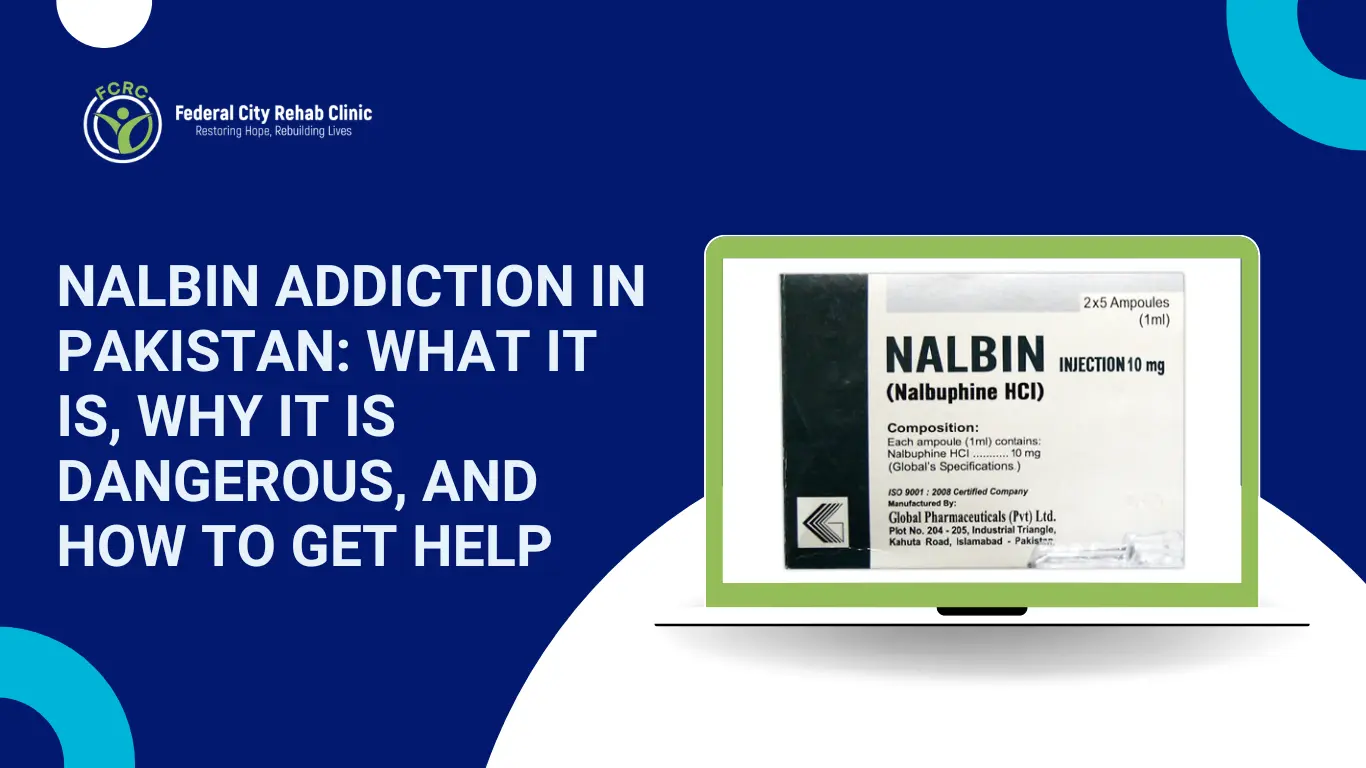
Unlike heroin or crystal meth, Nalbin does not carry the social stigma of a street drug. It comes in a clinical ampoule. It has a pharmacist’s label. It is sold, or at least obtainable, through medical channels. And yet it is an opioid, with the same addictive potential as morphine, the same capacity to create physical dependence, and the same risk of fatal overdose.
At the Federal City Rehab Clinic, we are seeing Nalbin dependency with increasing frequency. Patients arrive having started on legitimate pain treatment, or having been introduced to the drug by someone who knew what effect it produced. By the time they reach us, the dependency is real, the withdrawal is severe, and the family is often at a complete loss. This blog exists because Nalbin addiction in Pakistan is a growing crisis that almost nobody is talking about. It is time to talk about it.
What Is Nalbin?
Nalbin is the trade name used in Pakistan for nalbuphine hydrochloride, a synthetic opioid analgesic used medically for moderate to severe pain. It is delivered by injection and belongs to a class of drugs known as mixed opioid agonist-antagonists. This means it simultaneously activates certain opioid receptors while blocking others, producing pain relief alongside sedation and, at higher doses, a sense of euphoria or dissociation.
Nalbin is as potent as morphine in terms of its analgesic effect. The clinical community initially considered it to have lower addiction potential than pure opioid agonists such as heroin or morphine because of its ceiling effect on euphoria. In practice, this turned out to be a serious underestimation. Physical dependence develops rapidly with regular use. Tolerance builds steadily, pushing users toward higher and more frequent doses. And withdrawal from Nalbin is deeply uncomfortable, creating exactly the cycle of compulsive use that defines opioid addiction.
Globally, Nalbin misuse is documented most prominently among bodybuilders, who use it to suppress pain during training. Research published in pharmacology literature confirms that among those groups, all individuals studied who misused nalbuphine met the clinical criteria for opioid dependence. In Pakistan, the pattern is broader. The drug is misused by people in chronic pain who have escalated beyond prescribed doses, by those who were introduced to it recreationally, and by opioid users who turn to Nalbin when heroin is unavailable or unaffordable.
Why Nalbin Is So Easy to Become Dependent On
The reason Nalbin dependency develops so quietly is that it does not announce itself the way a street drug does. The person using it may genuinely believe they are managing pain, not feeding an addiction. The line between therapeutic use and dependence is crossed gradually, almost imperceptibly, and by the time it is recognised, stopping has become medically complicated.
Tolerance builds fast
With repeated use, the body adapts to the presence of nalbuphine by reducing its sensitivity to the drug. What began as 10mg producing meaningful pain relief now requires 20mg, then 40mg, then more. The user is not getting higher. They are simply maintaining what now feels like normal. The dose escalation happens over weeks, not years, and it happens without the user consciously choosing it.
The withdrawal is severe enough to keep users trapped
FDA prescribing documentation for nalbuphine describes a withdrawal syndrome characterised by restlessness, severe muscle aches, sweating, chills, insomnia, nausea and vomiting, runny nose, increased heart rate and blood pressure, and in serious cases, psychosis and seizures. These symptoms emerge within hours of the last dose. They are intensely uncomfortable. For someone who has been using Nalbin for weeks or months, the prospect of experiencing these symptoms is enough to ensure continued use regardless of any desire to stop.
This is the mechanism of opioid dependency at its most fundamental. The drug is no longer taken for pleasure or pain relief. It is taken to avoid the agony of its absence. Stopping is not a matter of willpower. It is a clinical challenge that requires medical management.
It is accessible without adequate safeguards
Pakistan does not currently classify nalbuphine as a controlled substance under Schedule I or II regulations, despite evidence of widespread misuse. Reporting from The News International has documented how easily Nalbin can be obtained, with the drug sometimes sold or obtained outside normal prescription channels. This accessibility means that someone who develops a dependency can sustain it without difficulty, and someone who is introduced to it recreationally faces none of the practical barriers that might otherwise interrupt use.
Signs of Nalbin Addiction: What Families and Patients Should Look For
Because Nalbin is an injectable drug, many of the signs are specific to its route of administration. Families who know what to look for are far better positioned to intervene early.
Physical signs
- Injection marks: Bruising, track marks, or scarring on the arms, legs, or other injection sites. Obscured or collapsed veins from repeated injection.
- Sedation and slowed responses: Unusual drowsiness, slurred speech, slowed reaction times, and a general sense of disconnection during periods of intoxication.
- Pinpoint pupils: Constricted pupils are a classic sign of opioid intoxication, visible even indoors in low light.
- Significant weight loss: Appetite suppression and reduced nutritional intake with sustained opioid use produce noticeable weight loss over time.
- Deteriorating physical health: Pallor, poor skin condition, and reduced resistance to illness. Injectable drug use also carries serious infection risks including hepatitis B, hepatitis C, and HIV if needles are shared.
- Withdrawal symptoms appearing between doses: If you notice a family member becoming agitated, sweating, complaining of body aches, experiencing nausea, or becoming intensely irritable at predictable intervals, this may be the opioid withdrawal cycle emerging between injections.
Behavioural signs
- Preoccupation with obtaining and using the drug: Conversations, plans, and daily routines increasingly organised around the next dose.
- Requests for money without clear explanation: Sustaining a Nalbin dependency requires a consistent financial outlay. Unexplained requests for cash, missing household money, or sold valuables are common signs.
- Secretive behaviour around medical supplies: Hidden ampoules, syringes, or other injection equipment. A reaction of intense defensiveness when these spaces or objects are approached.
- Declining function at work or in studies: Inability to concentrate, frequent absences, and deteriorating performance are consistent features of sustained opioid dependency.
- Withdrawal from family and social life: Increasing isolation, reduced participation in family activities, and the slow disappearance of relationships that existed before the drug became central.
- Continued use despite clear negative consequences: This is the clinical definition of addiction. The person can see what the drug is doing to them and to their family and continues nonetheless. This is not a choice in any meaningful sense. It is the nature of physical and psychological dependency.
One or two of these signs may have innocent explanations. Several of them appearing together, or any combination alongside the physical signs of injection use, warrants urgent clinical attention.
Who Is at Risk in Pakistan?
Nalbin dependency does not have a single profile. In our clinical experience at FCRC, we see it across a range of patients and circumstances.
People managing chronic pain
Patients who have been prescribed nalbuphine for genuine medical conditions, including kidney stones, post-surgical pain, or chronic musculoskeletal conditions, sometimes escalate beyond prescribed doses as tolerance develops. The dependency creeps up on them. Many arrive at treatment having used the drug for years, with no clear moment at which medical use became addiction.
Young men seeking physical enhancement
Consistent with international patterns, we see nalbuphine misuse among young men engaged in intense physical training who use the drug to suppress pain and extend performance. The subculture of injectable substance use in some gym environments in Pakistan has normalised nalbuphine alongside anabolic steroids, with users often unaware of the addiction risk until dependency is already established.
Opioid users seeking alternatives
Among people already using heroin or tramadol, Nalbin is sometimes adopted as an alternative when the primary drug is unavailable or when the user is attempting to manage their opioid use. Because nalbuphine is a mixed agonist-antagonist, it interacts in complex and sometimes dangerous ways with other opioids. Using Nalbin alongside another opioid can precipitate acute withdrawal. Using it as a substitute does not resolve the underlying dependency.
Medical and paramedical professionals
Access to injectable medications is easier for those working in healthcare settings. Nalbin dependency among doctors, nurses, and other healthcare workers is a recognised pattern both internationally and in Pakistan, and it is one that carries particular shame and secrecy because of professional consequences. FCRC treats these patients with complete confidentiality and without judgement.
Why Nalbin Withdrawal Should Never Be Managed at Home
Stopping Nalbin abruptly without medical supervision is dangerous. Withdrawal seizures, psychosis, and severe cardiovascular instability are documented risks. Every Nalbin detoxification at FCRC is conducted under 24-hour medical monitoring.
Nalbuphine withdrawal shares characteristics with classic opioid withdrawal syndrome. Mayo Clinic clinical documentation confirms that severe withdrawal side effects can occur when nalbuphine is stopped suddenly, and that gradual dose reduction under clinical supervision is the appropriate management approach. At higher doses or after prolonged use, abrupt cessation carries the risk of seizures, psychotic episodes, and autonomic instability.
Families sometimes attempt to manage withdrawal at home, believing that removing access to the drug is enough. It is not. The physical and psychological intensity of opioid withdrawal is severe enough that unsupported attempts to stop almost always fail. More importantly, they carry genuine medical risk. The correct approach is medically supervised detoxification with a structured tapering protocol, carried out by a clinical team with specialist opioid expertise.
How FCRC Treats Nalbin Addiction
Nalbin dependency is a medical condition. It responds to structured, evidence-based treatment delivered by a specialist team. At FCRC, our treatment programme for Nalbin-dependent patients follows an integrated model that addresses both the physical dependency and the underlying factors that sustain it.
Phase 1: Comprehensive clinical assessment
Every patient begins with a thorough psychiatric and addiction assessment. We establish the depth and duration of the dependency, identify any co-occurring mental health conditions, review the patient’s medical history and any polydrug use, and develop an individual treatment plan. For Nalbin patients who are also using other substances, this assessment is particularly important because the interaction of multiple dependencies requires careful clinical sequencing.
Phase 2: Medically supervised detoxification
Withdrawal from nalbuphine is managed through an individualised tapering protocol under 24-hour clinical supervision. Our medical detoxification programme uses evidence-based pharmacological support to manage withdrawal symptoms safely and with the greatest possible patient comfort. No patient at FCRC attempts to stop Nalbin cold turkey. The process is gradual, monitored, and adapted in real time by our clinical team as the patient moves through it.
Phase 3: Dual diagnosis treatment
The majority of patients presenting with opioid dependency carry an underlying mental health condition, whether depression, anxiety, unresolved trauma, or chronic pain. Treating the addiction without treating the underlying condition leaves the patient vulnerable to relapse. FCRC’s dual diagnosis programme provides simultaneous, integrated treatment for both, delivered by our consultant psychiatrists and doctoral-level psychologists.
Phase 4: Individual and group psychotherapy
Detoxification removes the physical dependency. Psychotherapy addresses the psychological roots of addiction and builds the skills needed to maintain recovery. Our clinical team uses Cognitive Behavioural Therapy (CBT), Motivational Interviewing, and trauma-focused approaches, tailored to each patient’s specific history and needs. Group therapy provides the additional dimension of peer support, reducing the isolation that often accompanies opioid addiction.
Phase 5: Family therapy and support
Nalbin addiction, like all opioid dependency, has a profound impact on the family system. FCRC’s family therapy programme actively involves family members in the treatment and recovery process. Families learn how addiction works, how to respond to a recovering family member without inadvertently enabling relapse, and how to rebuild trust and communication that the addiction may have damaged.
Phase 6: Aftercare and relapse prevention
Recovery from opioid dependency does not end on the day of discharge. FCRC develops a structured aftercare plan for every patient, including a clear framework for the early weeks and months following treatment, identification of relapse triggers specific to each patient, and access to ongoing outpatient support from our clinical team. For patients at higher risk of relapse, we discuss appropriate medical aftercare options with our consulting psychiatrists.
Frequently Asked Questions
Is Nalbin addiction the same as heroin addiction?
A Note on Seeking Help
If you are reading this because you recognise yourself in what you have just read, please know this: the fact that you are here, looking for information, is meaningful. It means something in you is ready, even if the rest of you is frightened.
Nalbin addiction is not a character flaw. It is a physiological condition with identifiable mechanisms, a known clinical trajectory, and an effective treatment pathway. The shame that surrounds it in Pakistan is not a reflection of the truth. It is a reflection of how little open conversation there has been about this drug and the people it affects.
FCRC has walked this road with patients and families who arrived feeling exactly as you may be feeling now. We are not here to judge anyone. We are here to help. If you are ready to talk, our team is available around the clock, for a free and confidential conversation. Call us, or visit the contact page to get in touch.
Can Nalbin addiction be treated without residential care?
For mild or early-stage dependency, outpatient treatment may be appropriate. For anyone with significant physical dependency, a history of failed outpatient attempts, co-occurring mental health conditions, or polydrug use, residential treatment produces substantially better outcomes. Our clinical team will make this determination after a thorough assessment and will give you an honest recommendation rather than a default one.
My family member says they can stop on their own. Should I be worried?
Yes, if they have been using Nalbin regularly for more than a few weeks. The subjective experience of early withdrawal is often described by patients as feeling like severe flu combined with intense anxiety and insomnia. Without clinical support, most people experiencing this return to use within hours or days simply to relieve the symptoms. The belief that willpower alone is sufficient does not account for the physical reality of opioid withdrawal. Clinical support is not a weakness. It is what makes stopping possible.
How confidential is treatment at FCRC?
Completely confidential. No information about a patient’s treatment is shared with any employer, educational institution, family member, or third party without the patient’s explicit written consent. Our facility in Bani Gala provides both physical and social privacy. For healthcare workers and professionals particularly concerned about confidentiality, we have extensive experience managing these situations with absolute discretion.
How long does treatment take?
The medical detoxification phase for Nalbin dependency typically takes two to four weeks, depending on the duration and severity of use. A comprehensive residential programme runs 30 to 90 days. The appropriate length is determined by the clinical team after assessment and reviewed throughout treatment. Aftercare support continues beyond discharge.
A Note on Seeking Help
If you are reading this because you recognise yourself in what you have just read, please know this: the fact that you are here, looking for information, is meaningful. It means something in you is ready, even if the rest of you is frightened.
Nalbin addiction is not a character flaw. It is a physiological condition with identifiable mechanisms, a known clinical trajectory, and an effective treatment pathway. The shame that surrounds it in Pakistan is not a reflection of the truth. It is a reflection of how little open conversation there has been about this drug and the people it affects.
FCRC has walked this road with patients and families who arrived feeling exactly as you may be feeling now. We are not here to judge anyone. We are here to help. If you are ready to talk, our team is available around the clock, for a free and confidential conversation. Call us, or visit the contact page to get in touch.