Ganja Addiction in Pakistan: Understanding the Country’s Most Used Drug
Author: Dr. Obaid Ullah Khan, Consultant Psychiatrist, Federal City Rehab Clinic. Specialist in psychiatric assessment and treatment of depression, anxiety disorders, bipolar disorder, schizophrenia, PTSD, OCD, and dual diagnosis presentations.
Ganja is the most widely used illegal drug in Pakistan. It is also the one most likely to be dismissed as harmless.
Families assume it is just a phase. Young people argue it is natural. Users point to its cultural history and compare it favourably to alcohol. And by the time the pattern has crossed from use into addiction, the conversation about whether ganja is dangerous has been going on for years without producing any change.
The dismissal is understandable. But it is also, for a significant proportion of people who use it heavily, genuinely wrong. Ganja addiction is a real clinical condition. The neurological changes it produces are measurable. The consequences for mental health, motivation, and cognitive function are documented extensively in the research literature. And the difficulty of stopping without professional support is greater than most users and families expect.
This blog explains what ganja is, what distinguishes it from other forms of cannabis available in Pakistan, how addiction develops, what the signs look like, and what treatment involves.
What is ganja?
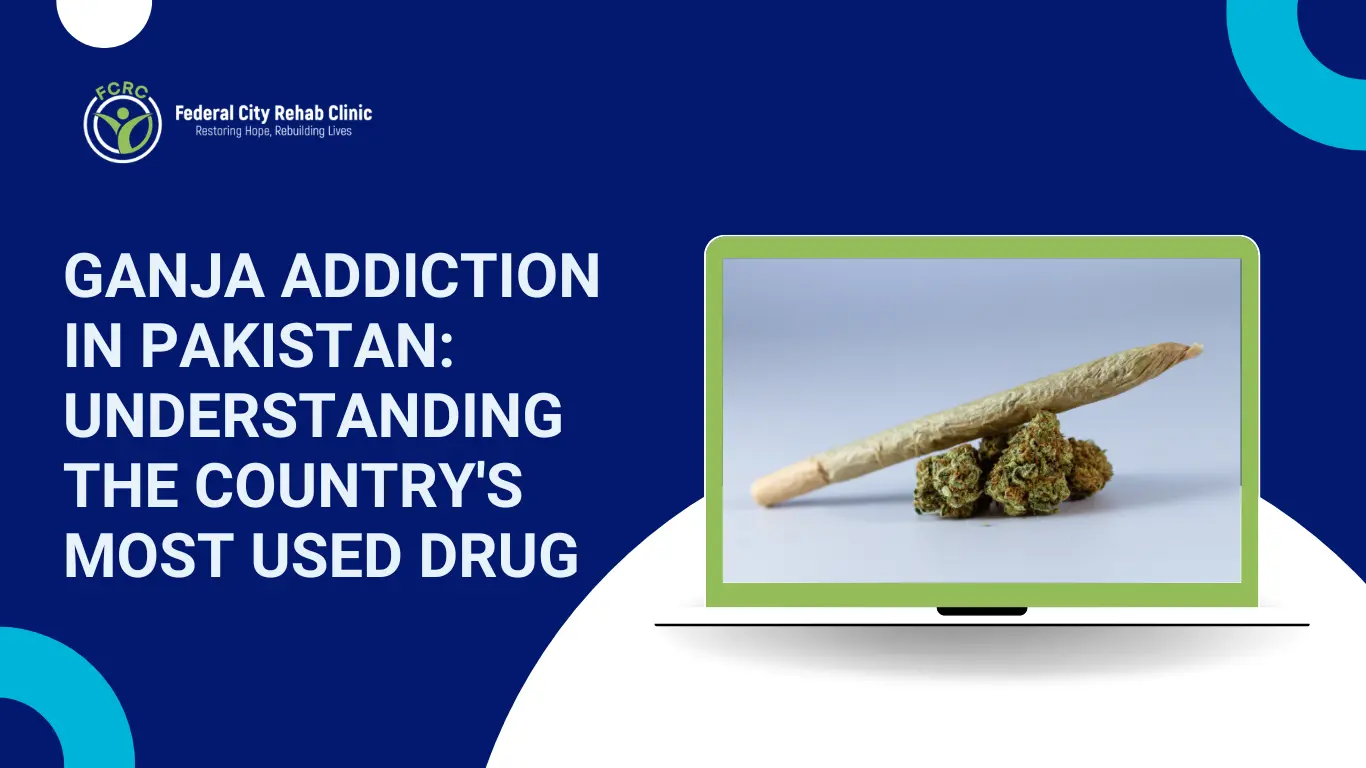
Ganja refers to the dried flowers, leaves, and stems of the cannabis plant. It is the form of cannabis most widely recognised internationally as marijuana or weed. In Pakistan, ganja is used alongside charas, which is a concentrated resin form of cannabis that is considerably more potent. The two are related but distinct in their potency and in the nature of the dependency they produce.
The primary psychoactive compound in ganja is tetrahydrocannabinol, commonly known as THC. THC is the compound responsible for the characteristic effects of cannabis including euphoria, relaxation, altered perception of time, and heightened sensory experience. The THC content of ganja varies depending on the strain, growing conditions, and how the plant has been processed.
Cannabis has been used in the South Asian subcontinent for centuries. Bhang, a preparation made from cannabis leaves and flowers, has a documented cultural and religious history in the region. This historical context contributes significantly to the normalisation of cannabis use in Pakistani society and is one of the reasons why its addiction potential is consistently underestimated.
The difference between ganja and charas
Both ganja and charas come from the cannabis plant and both produce their effects through THC. The critical difference is concentration.
Charas is produced by hand-rolling the fresh flowers of the cannabis plant, collecting the resin that accumulates on the hands. It is far more concentrated in THC than dried ganja. A person smoking charas is delivering a significantly higher dose of THC to the brain than a person smoking the same quantity of ganja.
In practical terms, this means that charas carries a higher addiction potential and a greater risk of the mental health consequences associated with high-potency cannabis. However, this does not mean ganja is without risk. Daily heavy use of ganja produces the same neurological changes, the same withdrawal pattern, and the same mental health consequences as charas, though typically on a longer timeline and at higher quantities.
For a more detailed discussion of charas specifically, our blog on Charas Addiction in Pakistan covers the resin form of cannabis in depth.
How ganja affects the brain
Ganja acts on the brain’s endocannabinoid system, a network of receptors distributed throughout the brain and body that plays a role in regulating mood, appetite, memory, pain, and the experience of reward. THC mimics the brain’s natural endocannabinoids and binds to these receptors, producing its characteristic effects.
The brain regions most significantly affected include the hippocampus, which governs memory formation and learning, the prefrontal cortex, which is responsible for decision-making and impulse control, and the amygdala, which processes emotional responses. THC disrupts normal functioning in all three areas simultaneously, which accounts for the characteristic effects of being high on ganja: impaired short-term memory, slowed and disordered thinking, altered emotional responses, and diminished inhibition.
With repeated, heavy use, the brain adapts to the presence of THC. It reduces its own production of natural endocannabinoids and decreases the sensitivity of cannabinoid receptors. The user develops tolerance, needing more ganja to achieve the same effect. And when ganja is not available, the brain’s now-suppressed endocannabinoid system produces the withdrawal symptoms that are characteristic of cannabis dependency: irritability, anxiety, insomnia, loss of appetite, and a pervasive sense of unease.
This cycle of tolerance and withdrawal is the neurological definition of physical dependency and it is fully present in regular heavy ganja users, contrary to the widespread belief that cannabis does not cause physical dependency.
Weed addiction: separating fact from myth
The question of whether cannabis is addictive is one of the most contested topics in popular drug discourse. The answer, based on the clinical evidence, is unambiguous: yes, cannabis is addictive for a significant proportion of regular users.
According to the National Institute on Drug Abuse, approximately 9% of people who use cannabis will develop a dependency. This figure rises to around 17% for those who begin using in adolescence and to approximately 25 to 50% for daily users. In absolute terms, given the prevalence of ganja use in Pakistan, these percentages represent a very large number of people.
The myths that surround cannabis addiction are worth addressing directly.
“Cannabis is natural, so it cannot be addictive.” Many highly addictive and dangerous substances occur naturally, including opium, cocaine, and tobacco. The natural origin of a substance has no bearing on its addiction potential or its capacity to cause harm.
“You cannot get physically addicted to weed.” This is false. Cannabis withdrawal is a recognised clinical syndrome, documented in the Diagnostic and Statistical Manual of Mental Disorders and characterised by irritability, anxiety, sleep disturbance, reduced appetite, and physical discomfort. The symptoms are real, uncomfortable, and a primary driver of relapse.
“Only hard drug users go to rehab. Weed is not that serious.” Cannabis use disorder accounts for a significant proportion of admissions to addiction treatment facilities worldwide. The seriousness of an addiction is measured by the harm it causes to the individual’s life, not by the social perception of the substance. A person who has lost their job, damaged their relationships, failed their studies, and cannot stop using ganja despite repeated attempts has a serious addiction regardless of what the substance is.
“Lots of people smoke weed without getting addicted.” This is true. Most people who try cannabis do not develop addiction. The same is true of alcohol and tobacco. The existence of non-addicted users does not mean addiction is impossible or rare among regular, heavy users.
Signs of ganja addiction
Because ganja use is common and socially normalised in Pakistan, the line between regular use and addiction is not always obvious to families or to the person using. The following signs indicate that use has moved into the clinical territory of addiction.
Daily or near-daily use. While not every daily user is addicted, daily use is the context in which addiction most commonly develops. The shift from weekend or social use to daily use is a meaningful warning sign.
Using first thing in the morning. Using ganja immediately upon waking, before any other activity, is a strong indicator that the person is using to manage withdrawal symptoms rather than for recreation.
Inability to stop despite wanting to. The person has made genuine attempts to stop or significantly reduce their use and has been consistently unable to sustain this. This is the defining feature of addiction as distinct from heavy use.
Withdrawal symptoms when not using. Irritability, anxiety, insomnia, loss of appetite, restlessness, and a pervasive sense of unease when ganja is unavailable all indicate physical dependency.
Prioritising ganja over responsibilities. Work, studies, family obligations, and personal hygiene are neglected in favour of obtaining and using ganja. The drug is the organising principle around which other life activities are fitted, rather than the other way around.
Loss of interest in non-drug activities. Hobbies, relationships, ambitions, and activities that previously provided pleasure no longer hold appeal. This is the motivational impairment that families describe most commonly: a previously engaged, energetic person who has become flat, passive, and disinterested.
Continued use despite consequences. The person continues using in the face of clear negative consequences including academic failure, relationship breakdown, financial problems, or health concerns.
Increasing tolerance. The quantity needed to feel the effects of ganja increases over time. The person uses more and more to achieve the same result, which compounds all of the above effects.
The mental health consequences of heavy ganja use
The relationship between cannabis and mental health is the area of greatest clinical concern and the one where the evidence has become increasingly clear and difficult to dismiss.
Motivational impairment is the most widely observed consequence of heavy ganja use and the one that families notice first. Clinically referred to as amotivational syndrome, it describes a pattern of reduced drive, initiative, and engagement with life that persists beyond the period of intoxication. The person appears lazy or indifferent but is actually experiencing a direct neurological consequence of chronic THC exposure affecting the dopamine and endocannabinoid systems simultaneously.
Memory and cognitive impairment is documented in heavy long-term users. Short-term memory, processing speed, and the ability to retain and apply new information are all measurably affected. For students and young professionals, these effects have direct consequences for performance and potential.
Anxiety and depression are both associated with heavy cannabis use. The relationship is bidirectional: people with anxiety and depression are more likely to use cannabis as self-medication, and heavy use worsens both conditions over time. Many patients presenting for treatment of cannabis use disorder are also managing significant anxiety or depressive symptoms that require concurrent treatment.
Psychosis. This is the most serious mental health consequence of heavy cannabis use and the one that warrants the clearest warning. High levels of THC exposure are associated with an elevated risk of psychotic episodes and psychotic disorders including schizophrenia, particularly in individuals with a genetic vulnerability. The evidence linking heavy cannabis use to psychosis is robust and has been replicated across multiple large studies. Research published in The Lancet Psychiatry found that daily use of high-potency cannabis was associated with a fivefold increased risk of psychosis compared to non-use.
The risk of psychosis is dose-dependent and is substantially higher in people who began using in adolescence, in those with a personal or family history of psychiatric illness, and in those using high-potency forms of cannabis. It is not a risk that affects every user, but it is a risk that is real, serious, and dose-related.
Ganja addiction in adolescents
The risk profile of ganja addiction changes significantly when use begins in adolescence. The brain is still developing until the mid-twenties, and cannabis exposure during this period has a disproportionately powerful impact on the developing reward, memory, and executive function systems.
Adolescents who use cannabis regularly are at substantially higher risk of developing addiction than adults who begin using at the same level. They are also at higher risk of the cognitive consequences of heavy use, including memory impairment and academic underperformance, and at higher risk of the mental health consequences including anxiety, depression, and psychosis.
In Pakistan, ganja use among male adolescents is particularly prevalent and is often normalised within peer groups in school and university environments. The social context makes it harder for individuals to recognise their own use as problematic and harder for families to intervene.
Our Youth and Adolescent Program is designed specifically for young people whose cannabis or other drug use began early and whose treatment needs, including the involvement of family and the developmental context of adolescence, require a specifically adapted approach.
Why quitting ganja is harder than expected
The near-universal experience of people who attempt to quit ganja after years of heavy daily use is that it is significantly harder than they expected. This surprise is itself a consequence of the normalisation of cannabis. If it were as harmless as commonly believed, stopping would be easy.
The difficulty operates on multiple levels.
The withdrawal syndrome, while not dangerous, is genuinely uncomfortable. Irritability, anxiety, insomnia, and physical restlessness in the first week or two of abstinence are sufficient to drive most unsupported quit attempts back into use.
The psychological dependency is equally significant. For many long-term users, ganja has been the primary means of managing stress, anxiety, boredom, and emotional discomfort for years. Stopping means confronting these states without the tool that has been used to manage them, while simultaneously experiencing withdrawal. Without the development of alternative coping strategies, the pull to return to use is powerful.
The social environment often compounds both. If a person’s social network consists primarily of other ganja users, and if use is a central component of their social interactions, stopping requires not only personal change but social reorganisation.
These factors are why professional support produces substantially better outcomes than unsupported quit attempts, and why the psychological component of treatment is as important as the management of physical withdrawal.
Treatment for ganja addiction
Treatment for cannabis use disorder is primarily psychological, supported by medical management of withdrawal symptoms where needed. The treatment pathway follows the same structure as for other substance use disorders.
Medical detoxification manages the withdrawal period under medical supervision. While cannabis withdrawal is not medically dangerous, medical support during this period significantly increases comfort and reduces the likelihood of returning to use before the acute withdrawal phase has passed. Our Medical Detoxification Program provides this support in a clinical setting.
Residential rehabilitation provides the structured environment in which the psychological work of recovery can take place, separated from the social and environmental contexts associated with use. Our Cannabis Addiction Treatment Program offers 30, 60, and 90-day residential options. For daily heavy users with a long history of use, the 90-day programme is recommended.
Cognitive Behavioural Therapy is the most evidence-supported psychological intervention for cannabis use disorder. It addresses the cognitive distortions about cannabis that maintain use, builds skills for managing cravings and high-risk situations, and develops alternative strategies for managing the emotional states that ganja was used to regulate.
Motivational Enhancement Therapy is particularly valuable for cannabis users because ambivalence about stopping is very common. Many people entering treatment for cannabis use disorder are not fully certain that their use is a problem, or are not convinced that the benefits of stopping outweigh the perceived costs. MET works directly with this ambivalence, strengthening the person’s own internal motivation for change.
Dual diagnosis treatment addresses the co-occurring mental health conditions that are frequently present alongside cannabis use disorder. Depression, anxiety, and in some cases psychotic symptoms all require concurrent clinical attention. Our Dual Diagnosis Program integrates psychiatric and psychological treatment within the rehabilitation process.
Family involvement through our Family Support Program provides families with the understanding and practical tools needed to support recovery, address enabling patterns, and prepare for the person’s return to the home environment.
When to seek help
If someone in your family is using ganja daily, has been doing so for a prolonged period, and shows signs of the withdrawal, tolerance, and consequence patterns described in this blog, a clinical assessment is the right next step.
The normalisation of ganja use in Pakistan means that many families wait far longer than they should before seeking help. The belief that it is not serious enough to warrant professional treatment costs real time and causes real harm. Cannabis use disorder responds well to treatment when treatment begins, and the outcomes are substantially better when it begins early.
Contact us today for a confidential assessment, WhatsApp us to reach out privately, or call us to speak with a member of our clinical team directly.
Frequently Asked Questions
Is ganja the same as charas?
Both come from the cannabis plant and both produce their effects through THC. Ganja is the dried plant material — flowers, leaves, and stems. Charas is a hand-rolled resin concentrate that is significantly more potent in THC. Both are addictive with heavy use, but charas carries a higher addiction potential and greater mental health risk due to its higher THC concentration.
How long does cannabis withdrawal last?
Acute withdrawal symptoms including irritability, anxiety, insomnia, and reduced appetite typically begin within 24 to 72 hours of stopping and peak within the first week. Most acute symptoms resolve within two weeks. Sleep disturbances and psychological cravings can persist for several weeks beyond this, particularly in heavy long-term users.
Can ganja cause permanent brain damage?
The neurological effects of heavy cannabis use, including cognitive impairment and changes to the reward system, are real and measurable. In adults, many of these effects are partially reversible with sustained abstinence, though recovery is slow. In adolescents, some effects on the developing brain may be more lasting. The psychosis risk associated with heavy high-potency cannabis use represents the most serious potential long-term neurological consequence.
My child uses ganja but says it helps with their anxiety. Should I be concerned?
Yes. While cannabis produces short-term anxiety relief for some users, heavy sustained use consistently worsens anxiety over time. The pattern of using cannabis to manage anxiety, developing tolerance, needing more to achieve the same effect, and then experiencing heightened anxiety during withdrawal is a well-documented cycle that escalates rather than resolves the underlying anxiety. The appropriate response is to seek treatment both for cannabis use and for anxiety, which are best addressed together.
Is cannabis legal in Pakistan?
No. Cannabis in all forms including ganja and charas is a controlled substance in Pakistan under the Control of Narcotic Substances Act 1997. Possession, use, and supply carry serious legal penalties.
Where can I get help for ganja addiction in Pakistan?
Our Cannabis Addiction Treatment Program at Federal City Rehab Clinic in Islamabad offers residential rehabilitation for cannabis use disorder, alongside medical detoxification and dual diagnosis treatment where needed. Contact us, WhatsApp us, or call us to arrange a confidential assessment.