Rehabilitation Center in Islamabad
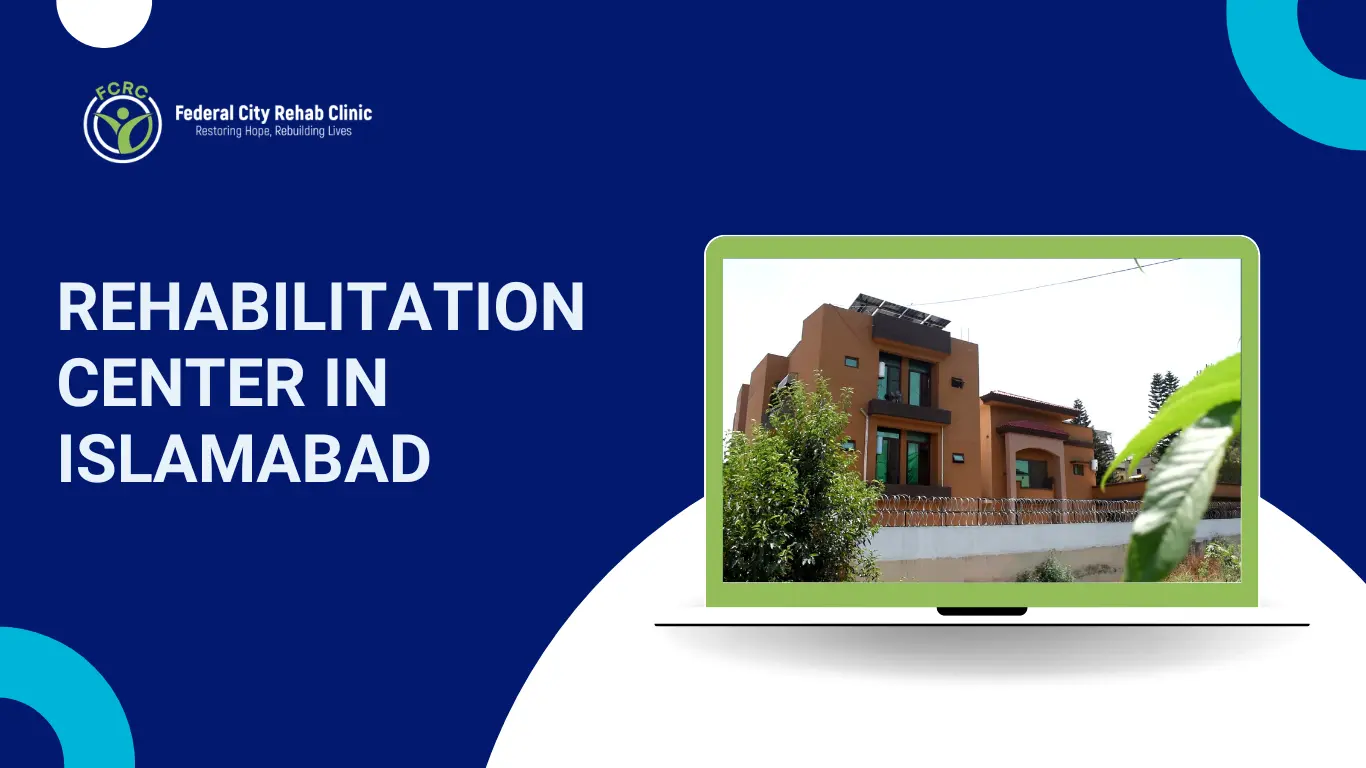
Finding the right rehabilitation center in Islamabad often starts with a difficult moment. A family member has hit a point where addiction or a mental health crisis can no longer be managed at home. At this stage, what matters most is finding a facility that is close enough to reach quickly, private enough to protect the family’s dignity, and clinically strong enough to actually help.
Federal City Rehab Clinic is based in Bani Gala, Islamabad, and has become one of the capital’s most established residential treatment centers for addiction and psychiatric care. This page covers the scale of the problem locally, what genuine treatment quality looks like, what FCRC offers, and what to expect from the first phone call to discharge.
The Scale of the Problem in Pakistan
Addiction in Pakistan is not a marginal issue. UNODC’s national survey work estimates that Pakistan is home to roughly 6.7 to 7.6 million drug users, including more than 800,000 people who use heroin regularly, a figure human rights organizations such as Justice Project Pakistan note has been reiterated by the UN in more recent years pending an updated national survey. Poverty compounds these numbers, with the World Bank estimating that a significant share of Pakistan’s population lives below the international poverty line, a level of economic pressure that intensifies both substance use and the psychiatric conditions that often accompany it.
What these numbers mean in practice is that very few families are alone in facing this. Yet historically, one of the most cited barriers to recovery in Pakistan has been access to comprehensive, affordable, and high-quality treatment facilities rather than centers offering detox alone. This gap is precisely what a genuine residential rehabilitation center needs to close.
What Actually Defines Treatment Quality
Not every facility calling itself a rehabilitation center delivers the same standard of care. The UNODC and WHO International Standards for the Treatment of Drug Use Disorders, developed through international clinical collaboration, organizes quality treatment around four pillars: sound service management, genuinely patient centered care, access to research backed interventions rather than unproven methods, and protection of patients’ health and human rights throughout treatment.
These four pillars are a useful lens for any family evaluating a rehabilitation center in Islamabad, or anywhere else. A facility built around all four looks different from one offering little beyond a controlled environment and a waiting period.
Why Location Matters When Choosing a Rehab Center
For families in Islamabad and Rawalpindi, proximity is not just about convenience. A local center means:
- Family therapy sessions and visitation are realistic to schedule, not a logistical burden
- Emergency situations, including intake during a crisis, can be handled without long travel delays
- Aftercare and outpatient follow-up remain accessible once residential treatment ends
- The clinical team understands the specific cultural and social pressures facing patients in the twin cities
FCRC’s location in Bani Gala also offers a quieter, more secluded setting away from the density of central Islamabad, which supports the kind of calm environment that early recovery requires.
Who FCRC Treats
The center accepts patients across a wide range of needs, including:
- Drug addiction treatment, covering commonly seen substances in the region
- Alcohol addiction treatment
- Ice and methamphetamine addiction treatment
- Heroin addiction and detox
- Female rehabilitation, with a dedicated track for women
- Dual diagnosis care for patients facing both addiction and a co-occurring psychiatric condition
- Mental health and psychiatric treatment, independent of addiction
- Overseas Pakistanis returning home specifically to access confidential treatment
Each patient is assessed individually before a treatment path is set. No two admissions look the same, even when the presenting issue seems similar on the surface.
What Treatment Looks Like
Most residential stays follow a structured 30, 60, or 90 day track, depending on the severity of the condition and the recommendation of the clinical team after intake. A typical path includes:
- Confidential intake and assessment, usually completed within the first day
- Medical detox, when clinically necessary, under supervision
- Individual and group therapy, addressing both the addiction and any underlying psychiatric conditions
- Family sessions, helping relatives understand their role in supporting recovery
- Aftercare planning, so the transition home does not undo the progress made
Dr. Kifayat Ullah, who oversees detox protocols at the center, emphasizes that the first several days often determine how the rest of treatment unfolds, which is why medical supervision during this stage is treated as non negotiable rather than optional.
What Sets This Center Apart in Islamabad
Islamabad has a small number of facilities offering genuine residential psychiatric and addiction care, and fewer still that combine both under one clinical team, or that meet the kind of service management and patient centered standards outlined by UNODC and WHO. FCRC’s approach centers on:
- A psychiatrist led clinical team rather than a purely counseling based model
- Discretion built into every stage, from intake to discharge, particularly valued by high profile and overseas families
- A facility designed for residential stays rather than adapted from another use
- Ongoing outpatient support once residential treatment concludes, so recovery does not stop at discharge
Frequently Asked Questions
Where exactly is the rehabilitation center located?
FCRC is located in Bani Gala, Islamabad, within reach of both Islamabad and Rawalpindi.
Is treatment confidential?
Yes. Confidentiality is maintained throughout intake, treatment, and discharge, and is a particular priority for families concerned about privacy.
Do you accept patients from outside Islamabad, including overseas Pakistanis?
Yes. The center regularly works with families based in Rawalpindi, across Pakistan, and with overseas Pakistanis who return specifically for treatment.
How common is addiction in Pakistan, really?
UNODC estimates put the number of people using drugs in Pakistan in the millions, with more than 800,000 regular heroin users alone. Addiction of this scale means seeking treatment is far more common, and far less isolating, than families often assume.
How do we start the admission process?
Reach out through contact us or WhatsApp us for a confidential initial conversation, and our team will guide you through assessment and next steps.
If your family is searching for a rehabilitation center in Islamabad, our team is available for a confidential conversation. Call us or WhatsApp us to speak with someone today.