When Success Hides the Problem: Executive Burnout and Addiction
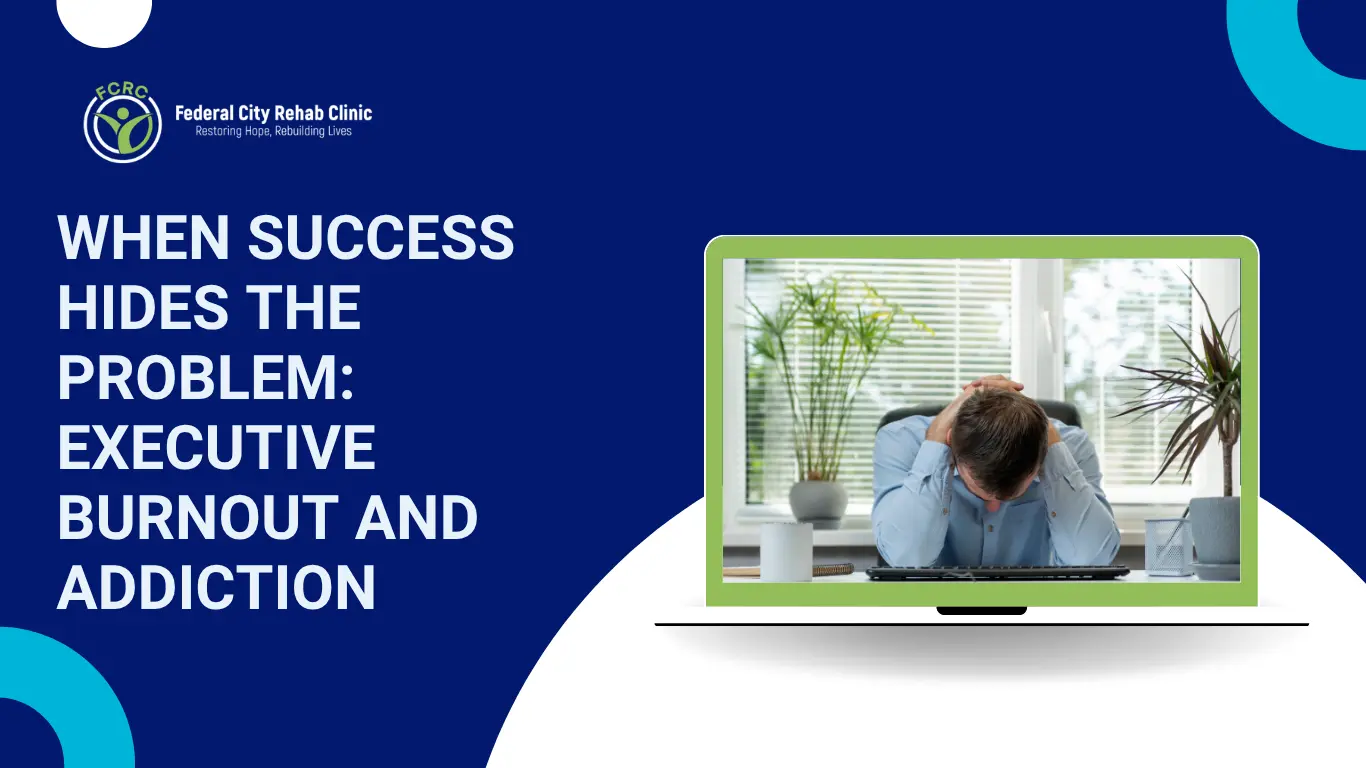
A pattern shows up consistently in clinical practice with business owners, senior executives, and other high-performing professionals: the substance use problem is usually the last thing anyone notices, including the person experiencing it, because everything else still appears to be working. The business is still running. The reputation is still intact. Performance has not visibly collapsed. This is precisely what makes this population harder to reach, not easier, and it is worth understanding why.
Burnout Is a Recognized Clinical Phenomenon, Not Just a Buzzword
The World Health Organization’s International Classification of Diseases formally recognizes burnout as an occupational phenomenon, defined by three dimensions: feelings of energy depletion or exhaustion, increased mental distance from one’s job or feelings of cynicism related to it, and reduced professional efficacy. It is not classified as a medical condition in itself, but its downstream effects, including a documented relationship to substance use, are very much a clinical matter.
Why Substances Enter the Picture: The Self-Medication Pattern
Addiction psychiatry has a well established framework for understanding why specific substances appear at specific moments in a person’s life, known as the self-medication hypothesis. The core clinical observation, first articulated by psychiatrist Edward Khantzian and refined over subsequent decades of research, is that individuals often discover, sometimes accidentally, that a particular substance relieves a specific painful or unmanageable emotional state, whether that is anxiety, exhaustion, emotional numbness, or the inability to switch off after a demanding day. The substance is not chosen at random. It is functioning, at least initially, as a solution to a real problem.
For a high-performing professional under sustained stress, this often looks specific and almost mundane at first: a drink to switch off after a demanding day that becomes several drinks nightly, a sleep aid used occasionally that becomes nightly, a stimulant used to push through fatigue that becomes a daily requirement rather than an occasional tool. None of these start as what most people picture when they imagine addiction. That is exactly the problem.
The Escalation Is Often Gradual, and Genuinely Hard to Self-Recognize
Clinicians working with high-achieving individuals in crisis consistently describe a similar progression. It typically begins with what looks like ordinary stress management, socially acceptable, situationally understandable, easy to rationalize. It moves into a stage where the substance use becomes regular and purposeful rather than occasional, and where colleagues or family, more often than the individual themselves, begin noticing subtler changes: decision-making that is slightly less sharp, emotional responses that seem disproportionate to the situation, consistency that has quietly declined.
By the time the substance use itself becomes the primary clinical problem, rather than a coping response to an underlying one, the person is often managing two interconnected conditions simultaneously, the original chronic stress and the neurobiological reality of a substance use disorder layered on top of it.
Because functional performance is often the last thing to visibly deteriorate in this population, professionals in this position frequently delay seeking help far longer than the severity of the underlying issue would warrant, precisely because they can point to continued professional success as evidence that nothing is seriously wrong.
Why Privacy Is Not a Peripheral Concern for This Population
For a business owner or senior executive, the stakes attached to seeking treatment are not the same as for the general population, and treating them as identical is a clinical mistake, not just an oversight. A damaged professional reputation, a compromised negotiating position, or exposure within a professional or investor network are realistic, material consequences, not abstract anxieties.
Treatment that does not account for this reality, through genuine confidentiality, private accommodation, and discreet admission logistics, is asking this population to accept a level of exposure that the general treatment population is not asked to accept, and that mismatch is a real reason capable professionals delay or avoid treatment entirely.
What Effective Treatment Looks Like for This Population
Addressing burnout-driven substance use effectively requires treating both conditions together, not sequentially and not in isolation. This means a genuine psychiatric assessment for co-occurring conditions, including depression, anxiety, and attention-related difficulties that may be primary or a consequence of the substance use itself, alongside evidence-based treatment for the substance use disorder specifically. It also means addressing the underlying contextual drivers, workload, boundaries, and the environment the person will return to, rather than treating the substance use as an isolated event disconnected from the professional life that produced it.
How FCRC’s Premium Private and Executive Care Program Addresses This
Our Premium Private and Executive Care Program was built specifically around this population’s actual needs, not as a luxury add-on but as a clinical necessity for genuine engagement. Single occupancy suites and a dedicated case manager provide the structural privacy this population requires to engage honestly.
Integrated psychiatric and psychological care, led by Dr. Obaid Ullah Khan, a Consultant Psychiatrist holding FCPS qualification, and Abrar Ahmad, a Consultant Clinical Psychologist and Addiction Therapist, ensures co-occurring conditions are treated alongside the substance use itself, not after it or separately from it. Confidential, flexible admission timing means treatment can be arranged around genuine professional constraints without compromising the seriousness of the clinical process itself.
Frequently Asked Questions
Is executive-focused treatment clinically different from standard treatment?
The clinical modalities are the same evidence-based approaches used throughout FCRC. What differs is the structure around them, privacy, case management, and admission flexibility, built to address the specific barriers this population faces in seeking help at all.
How do I know if what I am experiencing is burnout, substance dependency, or both?
This is precisely what a confidential clinical assessment is for. Many professionals arrive uncertain themselves, and a proper psychiatric evaluation, not self-assessment, is the reliable way to understand what is actually happening.
Does seeking treatment have to affect my professional standing?
Confidentiality is absolute, and admission logistics can be arranged with discretion as a primary consideration, not an afterthought.
If you recognize this pattern in yourself or someone you are concerned about, a confidential conversation with our clinical team is available 24 hours a day, with no obligation attached to that first conversation.