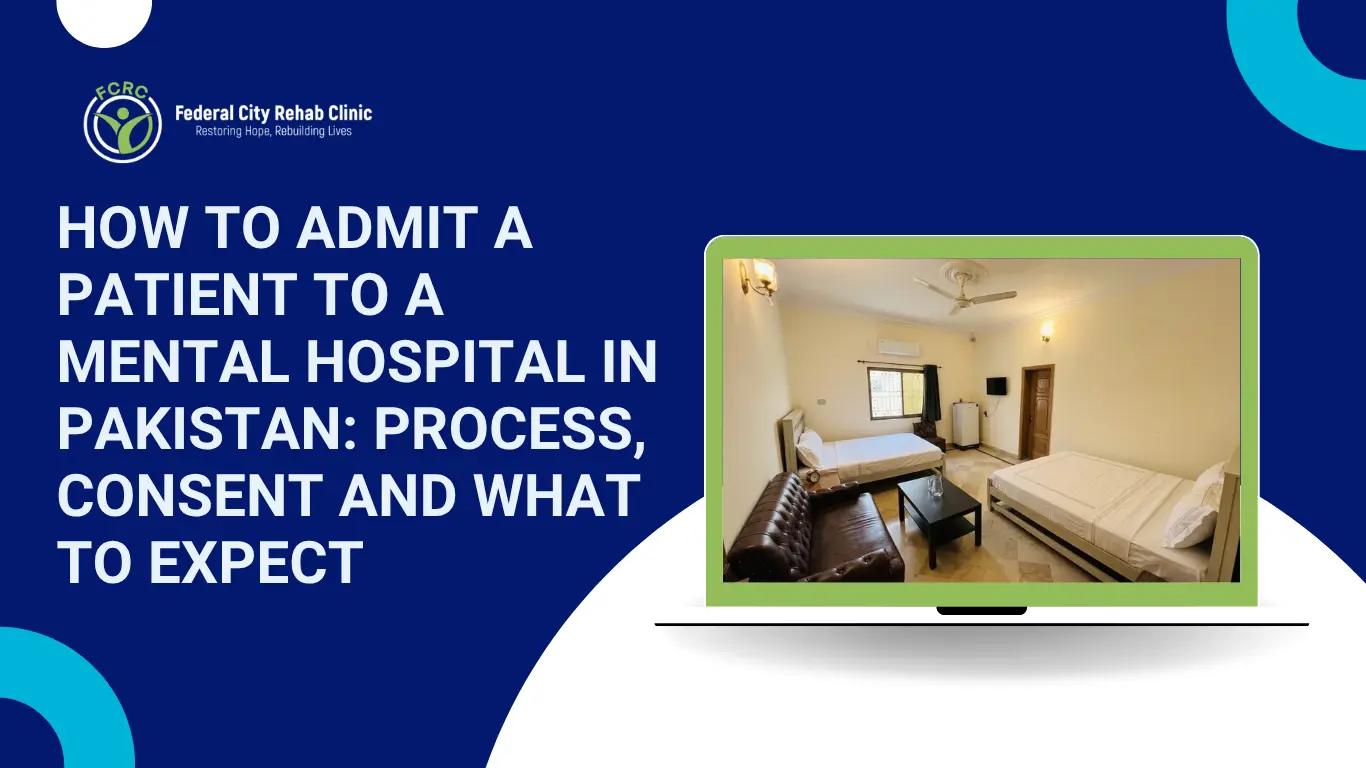
How to Admit a Patient to a Mental Hospital in Pakistan: Process, Consent and What to Expect
Getting a loved one admitted to a mental hospital is one of the hardest things a family can face. It is hard emotionally, because it can feel like a betrayal. It is hard practically, because nobody explains the steps. And it is hard legally, because the rules about consent are different from other medical care.
This guide explains the process in plain language: when admission is needed, the difference between voluntary and involuntary admission, what to bring, what happens in the first days, and what to do when the person refuses. It is general guidance. The law differs between provinces and Islamabad and changes over time, so please confirm specifics with the hospital and, where needed, a lawyer.
When is admission the right step?
Most people with mental illness are treated as outpatients. Admission is considered when:
- The person is at risk of harming themselves or others.
- They are so unwell (for example, severely psychotic, manic or depressed) that they cannot look after themselves.
- Treatment at home has not worked or cannot be done safely.
- A period of close observation, tests or a medication change is needed.
- Substance withdrawal or substance induced psychosis makes home care unsafe. See our pages on medical detox and dual diagnosis.
A psychiatrist decides whether admission is needed after an assessment. If you are unsure, an outpatient consultation is the first step.
Voluntary admission: the simplest route
In voluntary admission the patient agrees to be admitted. This is the best route whenever possible, and many people agree once someone explains calmly why they need help.
Typical steps:
- Consultation. The patient is assessed by a psychiatrist, either as an outpatient or on arrival.
- Decision. The psychiatrist recommends admission and explains the plan.
- Consent. The patient, ideally with a family member present, agrees and signs the admission forms.
- Registration and documentation. Identity documents, history and baseline tests are completed.
- Admission. The patient is shown their room and routine, and the family is told how updates and visits work.
A voluntary patient can usually ask to leave, though the treating team may advise against it and discuss the risks first. If the doctor believes the person is a danger to themselves or others, a different legal process may apply.
Involuntary admission: when the patient refuses
Sometimes a person who is very unwell does not recognize they are ill. They may refuse help because they believe nothing is wrong, or because they are afraid. This is common in psychosis and mania.
Pakistan’s mental health law allows involuntary assessment and treatment in certain circumstances, with safeguards. The original Mental Health Ordinance 2001 introduced these rules, and after health became a provincial subject in 2010, provinces adopted their own versions. Punjab, for example, has the Punjab Mental Health (Amendment) Act 2014, and Islamabad has its own amended law. A review of mental health law in Pakistan published by the Royal College of Psychiatrists describes the original framework, including time limits on detention and a right of appeal to a magistrate.
In general terms, involuntary admission involves:
- A medical assessment that the person has a mental disorder serious enough to require admission.
- A legal process that may involve a family member or relative applying, a court or magistrate, and medical certification.
- Limits on how long a person can be held without review.
- A right for the patient to challenge the detention.
The details, such as who may apply, which documents are needed and exact time limits, depend on the province or territory and the version of the law currently in force. We do not set these out here, because getting them wrong could harm you or the patient. Ask the hospital’s administration which procedure it follows, and speak to a lawyer if the situation is contested.
What families should know:
- Involuntary admission is a legal step, not a family decision alone.
- It does not mean a person has no rights. They keep the right to dignity, humane treatment and review.
- It should be a last resort after gentle persuasion has failed.
- If there is immediate danger, go to the nearest emergency department. Do not try to restrain or transport a violent person alone.
How to talk to someone who refuses
Before any legal step, try these. They work more often than families expect.
- Choose a calm moment and a trusted person. Someone the patient respects may succeed where a frightened parent does not.
- Describe what you have seen, not what they are. “You have not slept for four days and I am worried” works better than “You are mad.”
- Offer a small step. “Will you come and meet a doctor? We can leave if you want.”
- Avoid lies. Tricking someone into a hospital destroys trust and often delays recovery.
- Involve the doctor. A psychiatrist can sometimes speak to the patient and explain the need directly.
- Be patient. It may take several conversations.
Our guide on how to talk to a family member about addiction uses the same principles and applies to mental illness too.
Documents and items to bring
- Patient’s national identity card (CNIC), and the CNIC of the family member who is admitting them
- Previous prescriptions, reports and test results
- A list of current medicines and doses
- Written history: when symptoms began, what has been tried, any episodes of self harm or violence
- Names and phone numbers of two family contacts
- Basic clothing and personal items, as advised by the center
- Any legal papers, if the admission is not voluntary
What happens in the first days
- Assessment. Psychiatric and physical examination, history from the family, and tests.
- Observation. The team watches sleep, behavior and response to treatment.
- Treatment starts. Medication is started or adjusted, and therapy begins as soon as the patient is able to take part.
- Settling in. A routine is established: meals, rest, activities.
- Family update. You should be told the working diagnosis, the plan and the expected length of stay.
Patients often feel worse before they feel better. Anger, tears and pleading to go home in the first days are common and do not mean the admission was wrong.
Visiting and communication
Policies differ. Ask about visiting hours, phone calls and how often the doctor will update you. At FCRC, family members can visit by coordinating with the team in advance, which lets us choose a time when the patient is ready.
Costs and what to ask
Government hospitals offer free or subsidized care but may have waiting lists. Private centers have costs that depend on the length of stay and level of care. Ask any center to explain every charge before admission. At FCRC we do not publish prices because each plan is different, and our admissions team explains the factors directly.
Questions to ask before admitting
- Who is the treating psychiatrist and how often will they see the patient?
- What is included in the plan?
- How long do patients usually stay, and how is that decided?
- How do you handle a patient who becomes agitated or refuses medicine?
- Is the center registered, and can I see proof?
- What is the discharge plan?
For a comparison of the options in the twin cities, see our guide to the mental hospital in Islamabad and Rawalpindi.
Frequently Asked Questions
How do I admit a patient to a mental hospital in Pakistan?
Arrange an assessment with a psychiatrist. If admission is advised and the patient agrees, it is a voluntary admission with forms and documents completed at the hospital. If the patient refuses, a legal procedure applies.
Can a family force someone into a mental hospital?
Not on their own authority. Involuntary admission follows a legal process with medical certification and safeguards. Ask the hospital and a lawyer for the current procedure.
What documents are needed?
CNICs for the patient and the family member, previous medical records, a list of medicines and a written history.
Can a patient leave whenever they want?
A voluntary patient can usually ask to leave, though the team may advise against it. Patients admitted under a legal order cannot leave until the process allows.
How long does admission last?
It depends on the condition. At FCRC, stays usually start at 30 days and may extend to 60 or 90 days or longer.
Can family visit?
Usually yes, with coordination in advance.
What if my family member is violent?
Go to the nearest hospital emergency department. Do not try to manage it alone.
Does FCRC offer outpatient care if admission is not needed?
Yes, through our outpatient program.
Speak to our admissions team
If you are not sure whether admission is the right step, talk to us first. Call 0330 1454321 or message us on WhatsApp. We will tell you honestly what we recommend, explain the process and help with transport if it is needed.