What to Look For in a Private Rehab Facility: A Research-Based Checklist
Choosing a rehabilitation facility for yourself or a family member is usually done under pressure, often quickly, and rarely with the information a family would want if they had the time to research properly. Marketing language across the industry tends to converge on the same words, luxury, premium, world-class, regardless of what is actually happening clinically inside the building. This makes it genuinely difficult to tell a facility that delivers real, evidence-based care from one that has simply invested in better photography.
The US National Institute on Drug Abuse has spent over two decades researching what actually distinguishes effective addiction treatment from ineffective treatment, publishing its findings as a set of research-based principles first issued in 1999 and updated since. These principles were developed independently of any single facility or country, which makes them a useful, neutral checklist regardless of where you are considering treatment. Here is what they actually say, translated into questions worth asking any facility you are evaluating.
Is the Treatment Plan Actually Individualized?
NIDA’s research is unambiguous on this point: no single treatment approach works for everyone, and a facility that offers the same fixed program regardless of the patient’s specific history, substance, and co-occurring conditions is working against the evidence, not with it. A legitimate facility conducts a genuine clinical assessment before assigning a treatment path, and adjusts that plan as the patient’s needs change during treatment, rather than running everyone through an identical fixed schedule.
Does It Treat Co-Occurring Mental Health Conditions, Not Just the Addiction?
Depression, anxiety, PTSD, and other psychiatric conditions frequently occur alongside substance use disorders, and treating one while ignoring the other is a well documented path to relapse. This is formally known as dual diagnosis treatment. A facility that cannot assess and treat mental health and psychiatric conditions alongside addiction, because it lacks a psychiatrist on staff rather than only addiction counselors, is structurally unable to deliver this, no matter how well appointed the physical facility is.
Is the Program Long Enough for the Specific Case?
Research consistently shows that treatment duration needs to match the severity and history of the addiction, not a fixed marketing-friendly number. A facility that offers only a single program length, regardless of what the clinical assessment actually indicates, is optimizing for a sales cycle rather than a clinical outcome. Look for facilities offering a genuine range, commonly 30, 60, and 90 day tracks, with extended care available for more complex or longstanding cases.
Does It Actually Monitor Progress, Not Just Admit and Discharge?
Effective treatment requires continuous assessment throughout the stay, not a single intake evaluation followed by a fixed schedule regardless of how the patient responds. This should include monitoring for continued substance use during treatment itself, since lapses during treatment do occur and require an actual clinical response, not simply being ignored or treated as a disciplinary matter.
Is Detoxification Framed as a First Step, Not the Whole Treatment?
Medical detoxification manages the acute physical symptoms of withdrawal, but on its own does very little to change long-term substance use patterns. A facility that treats detox as the entirety of its program, rather than the necessary first stage before real behavioral and psychiatric treatment begins, is offering a fraction of what effective treatment requires. Ask directly what happens after detoxification is complete.
Does the Facility Involve Family, or Only the Patient?
Family and peer involvement has a measurable, positive impact on treatment engagement and outcomes, and treatment does not need to be entirely voluntary on the patient’s part to be effective, family and clinical involvement can meaningfully move a reluctant patient toward genuine engagement. A facility with no structured family therapy component, and no process for keeping family members involved and informed, particularly overseas family members, is leaving a genuinely evidence-backed tool unused.
Is There an Actual Aftercare Plan, or Just a Discharge Date?
Addiction recovery is understood clinically as a long-term process, one where relapse is a common part of the trajectory rather than a sign of treatment failure. A facility that treats discharge as the end of its relationship with the patient, without a structured, personalized aftercare and relapse prevention plan, is not applying what the research actually shows works.
What This Looks Like at FCRC
At FCRC, this checklist reflects how our residential program is structured, not a set of aspirations. Every patient is assessed individually before a treatment path is set, our clinical team led by Dr. Obaid Ullah Khan and Abrar Ahmad delivers integrated psychiatric and psychological care so dual diagnosis cases are treated as a single, coordinated plan rather than two separate problems, and program length is genuinely tailored, 30, 60, or 90 days, with extended care for more complex cases.
FCRC is accredited by the Islamabad Healthcare Regulatory Authority, and every patient leaves with a personalized aftercare and relapse prevention plan, not simply a discharge date.
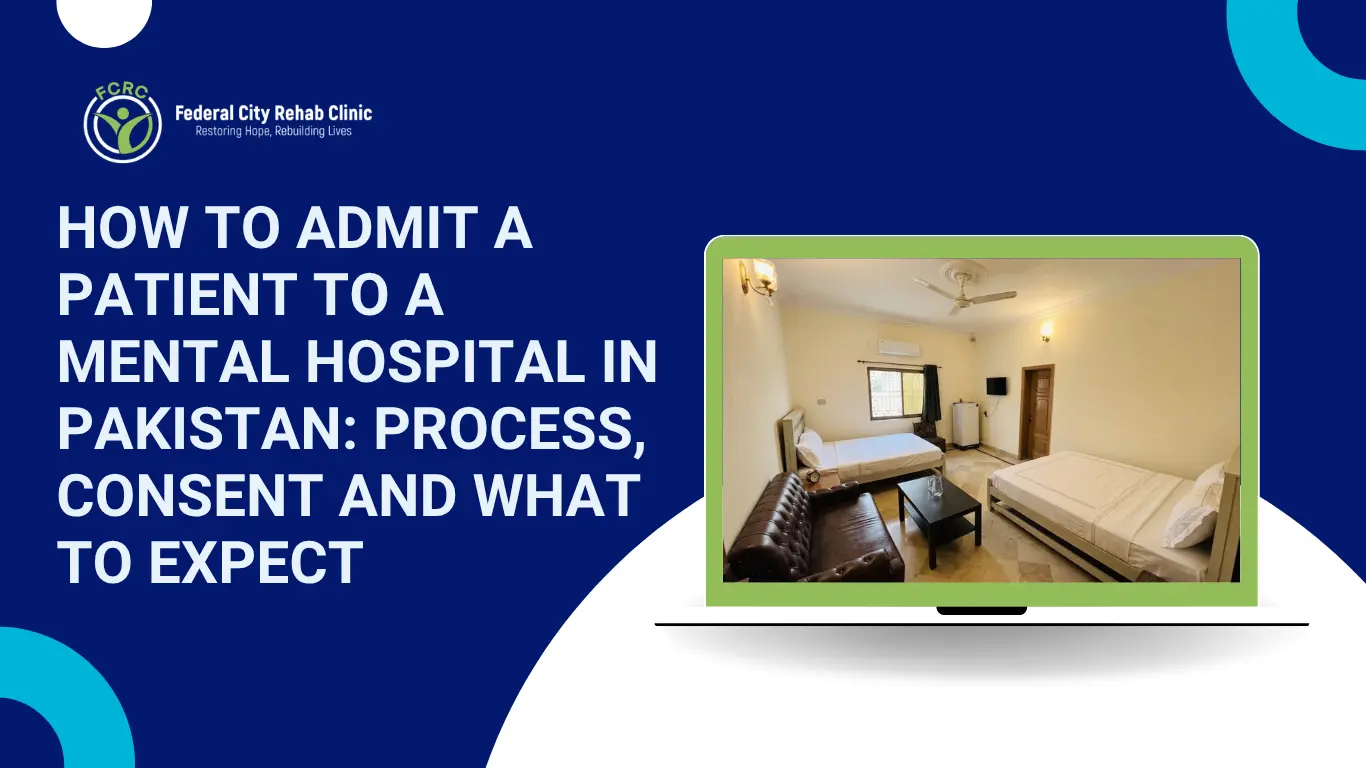
For families who need an additional layer of privacy on top of this clinical standard, our Premium Private and Executive Care Program applies the same evidence-based framework within a private wing, with single occupancy suites and a dedicated case manager.
Frequently Asked Questions
Are these NIDA principles specific to the United States, or do they apply anywhere?
The clinical research behind them is not country-specific. Addiction and its treatment work the same way biologically and psychologically regardless of geography, which is why the principles function as a useful checklist for evaluating a facility anywhere, including in Pakistan.
Is a longer program always better?
Not necessarily. The point is that duration should match clinical need, established through assessment, rather than being fixed at a single length regardless of the case.
Does dual diagnosis treatment cost more?
At FCRC, psychiatric assessment and care for co-occurring conditions is integrated into standard treatment, not offered as a separate add-on.
How do I know if a facility is genuinely doing this, rather than just claiming to?
Ask direct, specific questions during a pre admission consultation: who conducts the assessment, whether a psychiatrist is on staff, what the aftercare plan actually includes. A facility confident in its clinical process will answer these directly rather than redirecting to general marketing points.
If you are evaluating options for yourself or a family member, our admissions team is available 24 hours a day for a confidential conversation, and a pre admission video consultation with our clinical team before any commitment is standard practice.