
Lexotanil Tablet: Uses, Side Effects, Dependence And How To Stop Safely
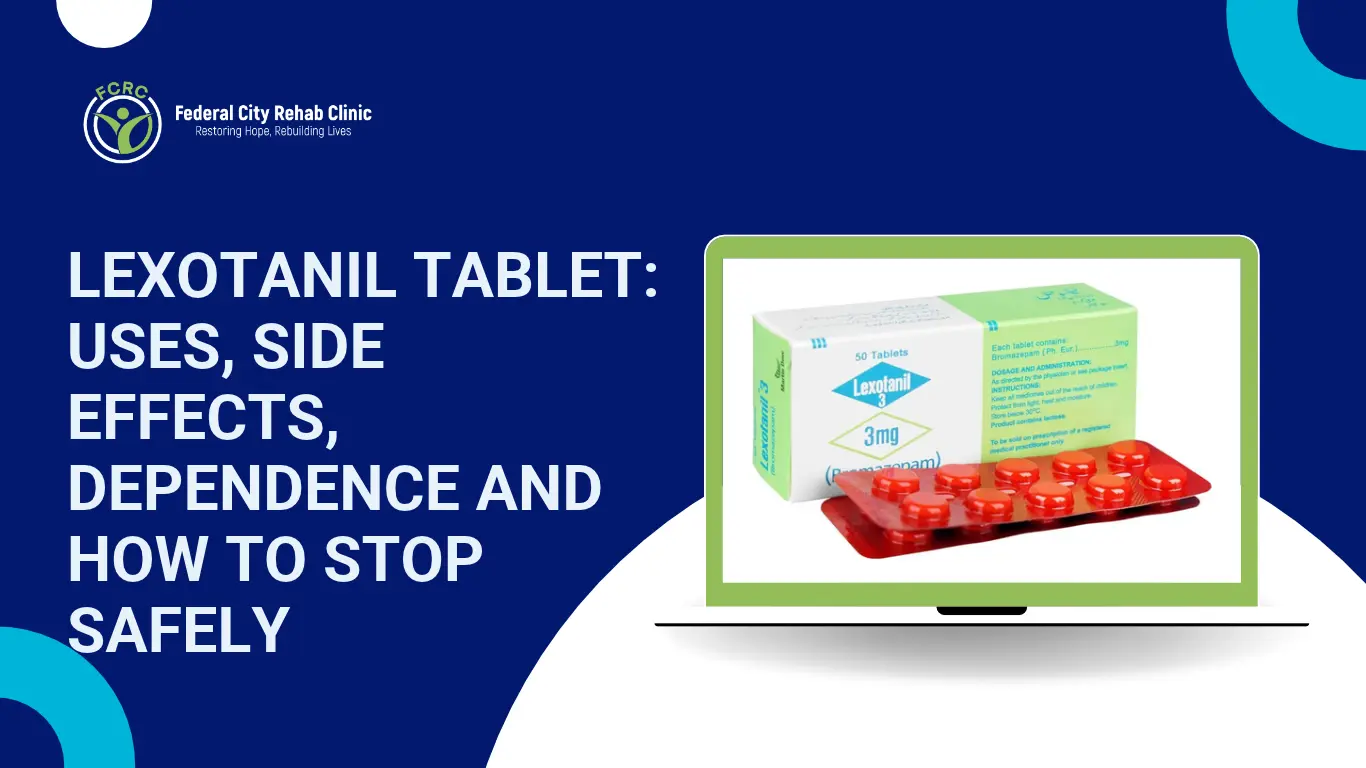
Lexotanil is one of the most widely used tablets in Pakistan for anxiety, tension and trouble sleeping. Many people have a strip in a drawer, and many have taken it for months or years without ever being told how long it is meant to be taken. This guide explains what Lexotanil is, what it is used for, how it is meant to be used, its side effects, why it can cause dependence and how to stop it safely.
It is general information, not a prescription. It does not tell you whether to take Lexotanil or how much. If you are worried about your use, or someone else’s, Talk to our admissions team on WhatsApp. Your message is confidential.
What is Lexotanil?
Lexotanil is a brand name for bromazepam, a medicine in the benzodiazepine group. Benzodiazepines slow down activity in the brain and nervous system, which calms anxiety, relaxes muscles and causes drowsiness. Xanax (alprazolam), Valium (diazepam) and Rivotril (clonazepam) belong to the same group.
Lexotanil is a prescription medicine. According to Australian product information for the same medicine, sold there as Lexotan, it is a prescription only benzodiazepine for short term relief of tension, anxiety and agitation. Being easy to find does not make it safe to take without a doctor.
Lexotanil tablet uses
The approved use is the short term treatment of severe anxiety, tension and agitation. The same Australian product information notes that everyday stress usually does not need an anxiety medicine. Doctors may also use benzodiazepines briefly, for example around a crisis, when anxiety is severe and other help is not yet working.
Lexotanil is not a treatment for the cause of anxiety. It calms the symptoms for a while. Longer term care for anxiety usually involves therapy, treatment of any depression and, where needed, medicines that are safer to take for a long time. See our Anxiety Disorder Treatment page.
Lexotanil 3 mg
Lexotanil tablets are commonly sold as 3 mg tablets. A 6 mg strength is also listed in Australian product information. The strength on the packet is not the dose you should take. The right dose depends on the person, and it is set by a doctor, who also decides how long to continue. Never increase the dose because it seems to be working less well. That is often an early sign of tolerance.
Lexotanil for sleep
Many people take Lexotanil as a sleeping tablet. It does cause drowsiness, which is why it seems to work. But the approved use is for anxiety, not for insomnia. Nightly use for sleep carries the same risks as other benzodiazepines:
- Sleep often becomes worse once you stop, because the brain has become used to the tablet
- Tolerance grows, so you need more to get the same effect
- You can feel groggy, forgetful or unsteady the next morning
Poor sleep has causes that can be treated, including anxiety, depression, pain, caffeine, alcohol, sleep apnea and irregular routines. A doctor can look for the cause rather than covering it. See our guide to sleeping pill dependency in Pakistan.
How long should Lexotanil be taken?
This is the question most people have not been asked. The Australian product information states that the overall treatment should not be more than 2 to 4 weeks, followed by gradual tapering, and that continuous long term use is not recommended. The consumer information says it should be used for short periods only, for example 2 to 4 weeks. Local guidance may differ, so ask your own doctor, but the principle is the same across benzodiazepines: short term use, then a plan to reduce.
If you have taken Lexotanil for months, you are probably dependent, and you should not stop it suddenly.
Lexotanil side effects
According to consumer medicine information for Lexotan and the product information, the common effects include:
- Drowsiness and tiredness
- Dizziness and poor coordination
- Memory problems and poor concentration
- Confusion
- Slurred speech
- Unpleasant dreams
Less common effects include headache, dry mouth, tremor and blurred vision. The effects can last into the next day, so do not drive or operate machinery until you know how it affects you.
Get urgent medical help if you notice sudden agitation or aggression, hallucinations, trouble breathing, or a fast, irregular heartbeat. These can be serious reactions.
Who needs extra care
- People who drink alcohol. Alcohol increases the sedation and can cause dangerous slowing of breathing. The product information says that using Lexotanil with alcohol should be avoided.
- Anyone taking other sedating medicines, such as other benzodiazepines, sleeping tablets, opioids or sedating antihistamines. Combining them can cause overdose.
- Older adults. They are more sensitive to the effects, and the risk of falls and confusion is higher. A lower dose is advised in people over 50.
- People with epilepsy. Stopping suddenly can make seizures worse.
- Pregnancy and breastfeeding. The product information says it is not recommended in pregnancy or while breastfeeding. Speak to a doctor early if you are pregnant or planning a pregnancy. Do not stop suddenly without advice.
- Children. It is not recommended for children.
- People with a history of alcohol or drug misuse. Their risk of dependence is higher.
Is Lexotanil addictive?
It can be. The consumer information states that benzodiazepines such as Lexotanil may lead to dependence. In 2020, the US Food and Drug Administration required stronger boxed warnings on all benzodiazepines. It said they can lead to abuse, misuse and addiction, and that physical dependence can develop when they are taken steadily for several days to weeks, even as prescribed.
Dependence is not a sign of weakness or bad character. It is how the brain responds to the drug. Signs include:
- Needing a higher dose for the same effect
- Feeling anxious, shaky or unable to sleep when a dose is late or missed
- Taking it “just to feel normal”
- Running out early, or going to more than one doctor or pharmacy to get it
- Thinking about the next tablet during the day
- Having tried to stop and failed
Lexotanil withdrawal symptoms
Stopping Lexotanil suddenly, or reducing it too fast, can cause withdrawal. The product information lists insomnia, anxiety and, in severe cases, convulsions. The FDA warns that stopping benzodiazepines abruptly, or lowering the dose too quickly, can cause withdrawal reactions including seizures, which can be life threatening.
Withdrawal can include:
- Strong anxiety and panic, often worse than before
- Trouble sleeping
- Shaking, sweating and a racing heart
- Headaches and muscle pain
- Irritability and restlessness
- Nausea
- In severe cases, confusion, hallucinations or seizures
If you have a seizure, severe confusion or hallucinations, go to an emergency department straight away.
How to stop Lexotanil safely
Do not stop suddenly. The label advice is to taper the dose gradually. The FDA adds that no single taper schedule suits everyone, so a plan has to be made for the individual.
- See a doctor first. Ask for a plan to reduce slowly, with follow up visits. Tell the doctor everything you take, including other tablets, alcohol and any other substances.
- Expect the plan to take weeks or longer, depending on how long and how much you have taken. Do not rush it.
- Treat the reason you started. If it was anxiety, depression or insomnia, that needs proper treatment, or the symptoms will return when the dose falls.
- Add support. Therapy such as CBT teaches skills for anxiety and sleep without tablets. See our Counseling and Therapy page and our Cognitive Behavioral Therapy page.
- Avoid alcohol and other sedatives during the taper.
- Do not swap one tablet for another without medical advice. Changing to another benzodiazepine is something a doctor sometimes does as part of a plan, but doing it alone can hide the problem.
- Know when to ask for more help. If you have been taking high doses, have mixed it with alcohol or other drugs, have had seizures before or have failed to stop alone, a supervised program is safer. Our Medical Detoxification page and our Xanax and Tramadol Addiction Treatment page explain how supervised withdrawal from prescribed and misused tablets works. Our guide to benzodiazepine addiction in Pakistan gives more background.
Help at FCRC
If you cannot stop Lexotanil on your own, you can arrange a private assessment with a consultant psychiatrist in Bani Gala, Islamabad. We look at what you take, how long, your mood and sleep, and any other substances, and we plan a slow, supervised reduction. See our Psychiatrist in Islamabad page. Where addiction and anxiety or depression go together, our Dual Diagnosis Treatment page explains how we treat both.
Lexotanil tablet uses in Urdu
لیکسوٹینل کیا ہے؟ لیکسوٹینل برومازیپام نامی دوا کا برانڈ نام ہے۔ یہ بینزوڈیازیپین گروپ کی نیند اور سکون لانے والی دوا ہے جو صرف ڈاکٹر کے نسخے سے لینی چاہیے۔
استعمال: یہ شدید بے چینی، گھبراہٹ اور تناؤ کے مختصر مدت کے علاج کے لیے ہے۔ عام طور پر اسے زیادہ سے زیادہ دو سے چار ہفتے کے لیے تجویز کیا جاتا ہے۔
نیند کے لیے: اس سے نیند آ جاتی ہے، مگر یہ نیند کی بیماری کا علاج نہیں ہے۔ روزانہ نیند کے لیے لینے سے عادت پڑ سکتی ہے۔
مضر اثرات: غنودگی، چکر، یادداشت اور توجہ کی کمزوری، الجھن اور بات میں لڑکھڑاہٹ۔ گاڑی نہ چلائیں اور شراب کے ساتھ ہرگز نہ لیں۔
عادت اور نشہ: یہ دوا عادت ڈال سکتی ہے۔ اچانک چھوڑنے سے شدید بے چینی، نیند کی خرابی، کپکپاہٹ اور بعض اوقات دورے بھی پڑ سکتے ہیں، اس لیے اسے کبھی اچانک نہ چھوڑیں۔ ڈاکٹر کی نگرانی میں آہستہ آہستہ کم کریں۔
مدد: اگر آپ لیکسوٹینل چھوڑنا چاہتے ہیں مگر نہیں چھوڑ پا رہے تو ہماری ٹیم سے رابطہ کریں۔ آپ کی معلومات مکمل رازداری کے ساتھ محفوظ رہتی ہیں۔
When to see a doctor
See a doctor if:
- You have taken Lexotanil for more than a few weeks and want to stop
- You need more tablets than before, or feel unwell without them
- You are mixing it with alcohol or other tablets
- You are worried about someone else’s use
- You are pregnant, or planning a pregnancy, and take it
- Anxiety or poor sleep is the reason you started, and it is not getting better
If someone has taken too many tablets, is very drowsy, breathing slowly or cannot be woken, go to the nearest emergency department at once.
Frequently Asked Questions
What is Lexotanil used for?
Lexotanil (bromazepam) is used for short term treatment of severe anxiety, tension and agitation. It is a benzodiazepine and a prescription medicine.
What are Lexotanil 3mg tablet uses?
The same as other strengths: short term relief of anxiety and tension. The dose and how long to take it are set by a doctor.
Is Lexotanil a sleeping tablet?
It causes drowsiness, but its approved use is for anxiety, not insomnia. Using it nightly for sleep can lead to tolerance and dependence.
Can I take Lexotanil every night?
Doctors advise against regular nightly use for long periods. Talk to a doctor about the cause of poor sleep.
How long can you take Lexotanil?
Product information advises treatment of 2 to 4 weeks, followed by gradual tapering, and does not recommend continuous long term use.
What are the side effects of Lexotanil?
Drowsiness, dizziness, memory problems, poor concentration, confusion and slurred speech are common. Get urgent help for agitation, hallucinations, breathing trouble or an irregular heartbeat.
Is Lexotanil addictive?
It can cause dependence, even when taken as prescribed, particularly with longer use or higher doses.
Can I stop Lexotanil suddenly?
No. Stopping suddenly can cause severe withdrawal, including seizures. Reduce the dose gradually with a doctor.
Can I drink alcohol while taking Lexotanil?
No. Alcohol adds to sedation and can slow breathing dangerously.
Is Lexotanil safe in pregnancy?
It is not recommended in pregnancy or breastfeeding. Speak to a doctor early rather than stopping suddenly.
What is the difference between Lexotanil and Xanax?
Both are benzodiazepines. They differ in how quickly they act and how long they last, but the risks of dependence and withdrawal are similar. A doctor decides which, if any, is suitable.
Does Lexotanil cause weight gain or memory loss?
Memory problems and poor concentration are listed as common side effects. Weight changes are less well documented. Tell your doctor about any change you notice.
How much does Lexotanil cost?
Prices vary by pharmacy and change over time. We cannot give a price. Ask a pharmacist or your doctor. A low price does not make long term use safe.