Author: Abrar Ahmad, CEO, Federal City Rehab Clinic. Consultant Clinical Psychologist and Addiction Therapist. Chartered Member, Psychological Society of Ireland.
Finding the right rehabilitation center in Islamabad is one of the hardest decisions a family will ever make. You are not simply choosing a facility. You are choosing who will care for someone you love at the most fragile point of their life. You want a place that is safe, private, and genuinely effective.
Islamabad has more options than it did a decade ago, but more options do not mean equal quality. This guide explains what separates a professional rehab center from a basic one, what treatment should include, what to expect from the first call to discharge, and how Federal City Rehab Clinic (FCRC) in Bani Gala approaches each part. Where a topic deserves more depth, we point you to a dedicated guide.
Addiction in Pakistan is not a marginal problem. Estimates vary, and the most complete national survey is now more than a decade old, but reporting on preliminary survey work in 2022 described roughly nine million people as affected by narcotics while a full national survey was still pending. Whatever the exact figure, it runs into the millions.
For families, the practical meaning is simple. Very few households are facing this alone, and yet many struggle to find a place that offers more than detox. What most patients need is medical detox, psychiatric care and structured therapy under one clinical team, in a setting that protects their privacy.
International guidance gives a useful starting point. The WHO and UNODC International Standards for the Treatment of Drug Use Disorders emphasise treatment that is evidence based, well managed and respectful of patients’ rights and dignity. Here is what that looks like in practice.
Ask who actually treats your loved one. A professional center employs consultant psychiatrists (in Pakistan, the FCPS in Psychiatry is the standard qualification), clinical psychologists with M.Phil or doctoral training, trained therapists and nursing staff on duty around the clock. Be cautious if doctors are described without qualifications or are only “available on call”.
Withdrawal can be dangerous. In dependent drinkers, alcohol withdrawal can cause seizures and delirium tremens within the first few days, and stopping benzodiazepines suddenly can also trigger seizures. ICE withdrawal can bring psychosis and suicidal thoughts. A center that cannot supervise detox around the clock is not equipped for the first and most critical phase of treatment. See how this works in our medical detox program.
Many patients with serious addiction also live with depression, anxiety, trauma or another condition, and the National Institute on Drug Abuse notes how often the two occur together. Treating only the substance use leaves the other half of the problem in place. Look for psychiatrists who see patients throughout treatment, not only at admission. Our dual diagnosis treatment guide explains the approach.
Therapy should be named and delivered by trained people: Cognitive Behavioural Therapy, motivational interviewing, group therapy, trauma informed care and structured family therapy. The NIDA Principles of Drug Addiction Treatment are clear that detox alone does little to change long term use and that treatment needs enough time to work. Be wary of centers that describe their approach only in spiritual or motivational terms.
Recovery is easier when a patient can rest, sleep and engage with therapy away from the noise and triggers of daily life. Environment will not replace clinical care, but it supports it.
In Pakistan, fear of stigma is often the biggest barrier to seeking help. A professional center should explain exactly how privacy is protected, confirm that nothing is shared without written consent, and allow anonymous first enquiries.
Look for medical detox, inpatient and outpatient options, dual diagnosis care, family therapy, and dedicated programs for women and young people, so that the center can respond to your family’s actual situation.
The weeks after discharge are among the most vulnerable. A good center builds a personal aftercare plan for each patient and stays available for follow up.
Ask whether the facility is accredited and whether it answers hard questions plainly. FCRC is accredited by the Islamabad Healthcare Regulatory Authority (IHRA).
Criterion | What good looks like | Question to ask |
Clinical team | Psychiatrists with FCPS on site, doctoral level psychologists, nursing around the clock | Who treats my family member, and are they present in the facility? |
Detox | Doctors and nurses present throughout, clear medication protocols | Who manages emergencies at night? |
Mental health | Psychiatric assessment at admission and during treatment | How are co occurring conditions treated? |
Therapy | Named, evidence based methods with trained therapists | Which therapies, and who delivers them? |
Privacy | Written consent for any disclosure, anonymous enquiry allowed | Who can see records, and when is information shared? |
Family | Structured family sessions and coordinated visits | What does your family program involve? |
Aftercare | Personal plan and follow up after discharge | How long are you available after discharge? |
Openness | Plain answers, no guaranteed success rates, no pressure | Can I see the facility and ask these questions in person? |
For a deeper, question by question checklist, read our guide on how to choose a rehab center in Islamabad.
FCRC provides treatment for the dependencies most often seen in Pakistan.
Inpatient treatment is advised when dependence is moderate to severe, when earlier attempts have not lasted, when home contains triggers, or when a mental health condition needs close management. Outpatient treatment suits lower severity dependence with strong support at home, or as a step down after a residential stay. A clinical assessment gives a clear recommendation. Our guide to inpatient versus outpatient rehab compares them in detail.
FCRC is in Bani Gala, a hillside neighbourhood of Islamabad known for quiet roads, clean air and green hills. For many patients, distance from familiar people, places and routines makes it easier to rest, stabilise and focus on therapy. The calm setting supports early recovery, particularly during the first weeks.
Bani Gala is also within reach of both Islamabad and Rawalpindi, so family sessions and visits are realistic to arrange, and aftercare and outpatient follow up stay accessible once residential treatment ends. If you are in Rawalpindi, read our guide to rehabilitation center in Rawalpindi. For patients from other cities, the admissions team arranges transport and a discreet arrival.
Our guide to what to expect at a caring addiction center in Islamabad walks through each stage in more detail.
The cost of rehabilitation depends on the substance and severity, the length of stay, inpatient or outpatient care, the medication and monitoring needed, any co occurring mental health condition, the room category and transport. Because needs differ so much, FCRC does not publish a fixed price. The admissions team gives a personalised answer in a confidential conversation. For a full explanation, read Islamabad rehabilitation center costs and detox cost in Pakistan.
We will not tell you FCRC is the right choice for every family, and no honest center can. What we can tell you is what we built it around.
آپ کی رازداری ہمارے لیے مقدس ہے۔ Your privacy is sacred to us.
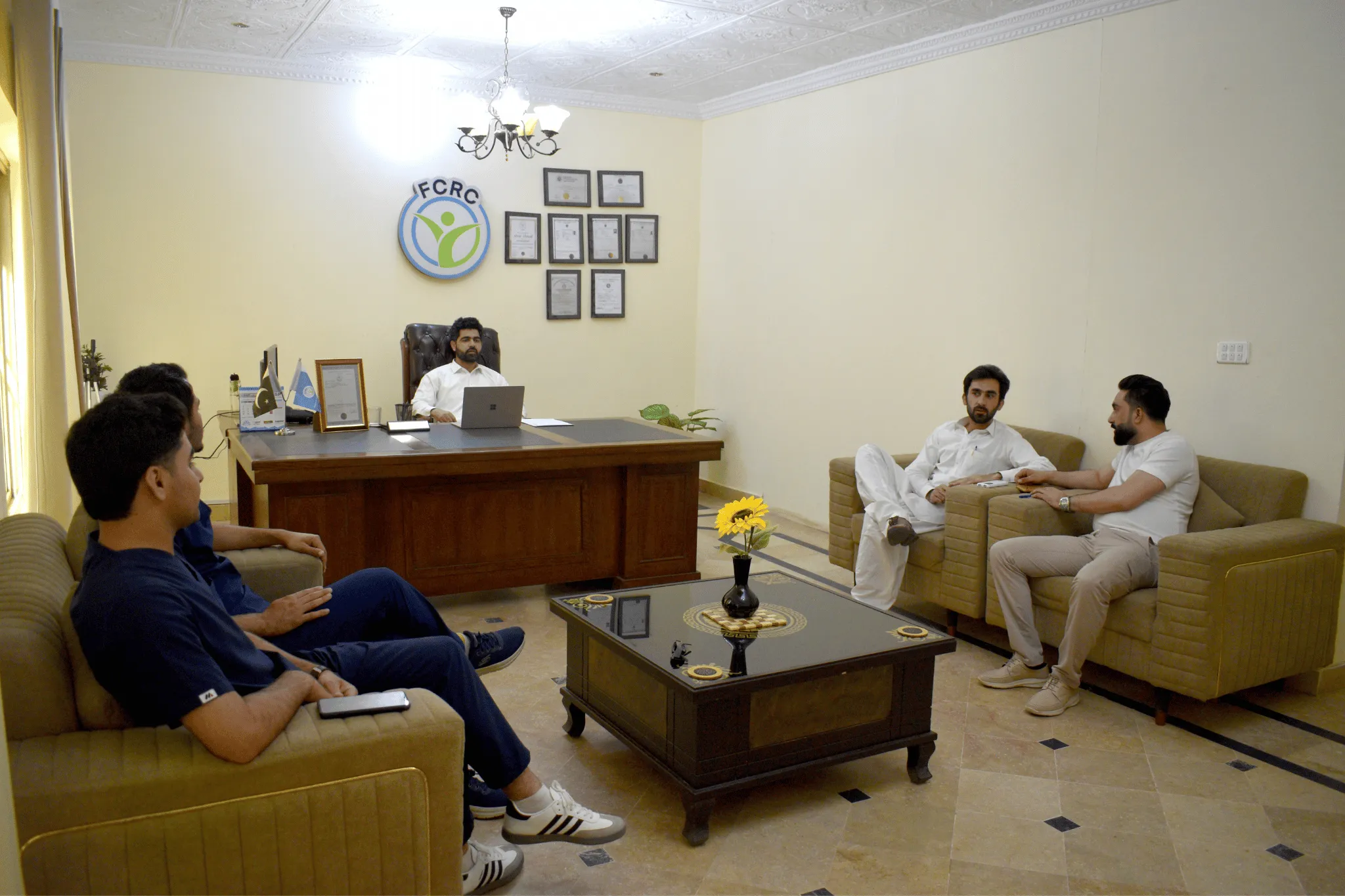
You can see the facility in our gallery, and our FAQs page covers confidentiality in full.
The best center is the one that meets the criteria above for your family’s situation: a qualified psychiatric and clinical team, supervised detox, integrated mental health care, real privacy and a clear aftercare plan. FCRC was built around those criteria, and we encourage you to ask every center the same questions before deciding.
It depends on the substance, severity, length of stay, type of care, medication and room category. FCRC does not publish a fixed price. The admissions team gives a personalised answer after understanding the situation, with no obligation.
Residential stays at FCRC usually start at 30 days, with 60 and 90 day stays and longer where needed. The clinical team recommends the length after assessment. Research on treatment length, including NIDA’s guidance that most people need at least three months of treatment, is the reason longer stays are common.
Yes. Nothing about a patient is shared without explicit written consent, and first enquiries can be anonymous.
Yes. Visits are arranged by coordinating with the team in advance, and family therapy sessions are part of every program.
Yes. FCRC runs a dedicated female rehabilitation program in a gender specific setting. See our female rehabilitation page.
FCRC runs a specialist ICE program in which consultant psychiatrists are involved from day one of detox, because ICE withdrawal is primarily a psychiatric emergency. See ICE addiction treatment.
Yes. Consultant psychiatrists assess and treat conditions such as depression, anxiety, bipolar disorder and psychosis together with the addiction.
Yes, for anyone who needs it, including patients travelling from other cities.
Bani Gala is within reach of both Islamabad and Rawalpindi, which makes family visits and aftercare practical.
The search for a rehabilitation center is, at its heart, a search for hope. Recovery is real, and it happens every day with the right clinical support and the right team. If you are ready to take the first step, or simply want to understand your options, FCRC’s admissions team is available 24 hours a day, every day of the year. There is no pressure, no judgement and no obligation.

WhatsApp us