Depression Medicine In Pakistan: Antidepressants, Side Effects And Safe Use
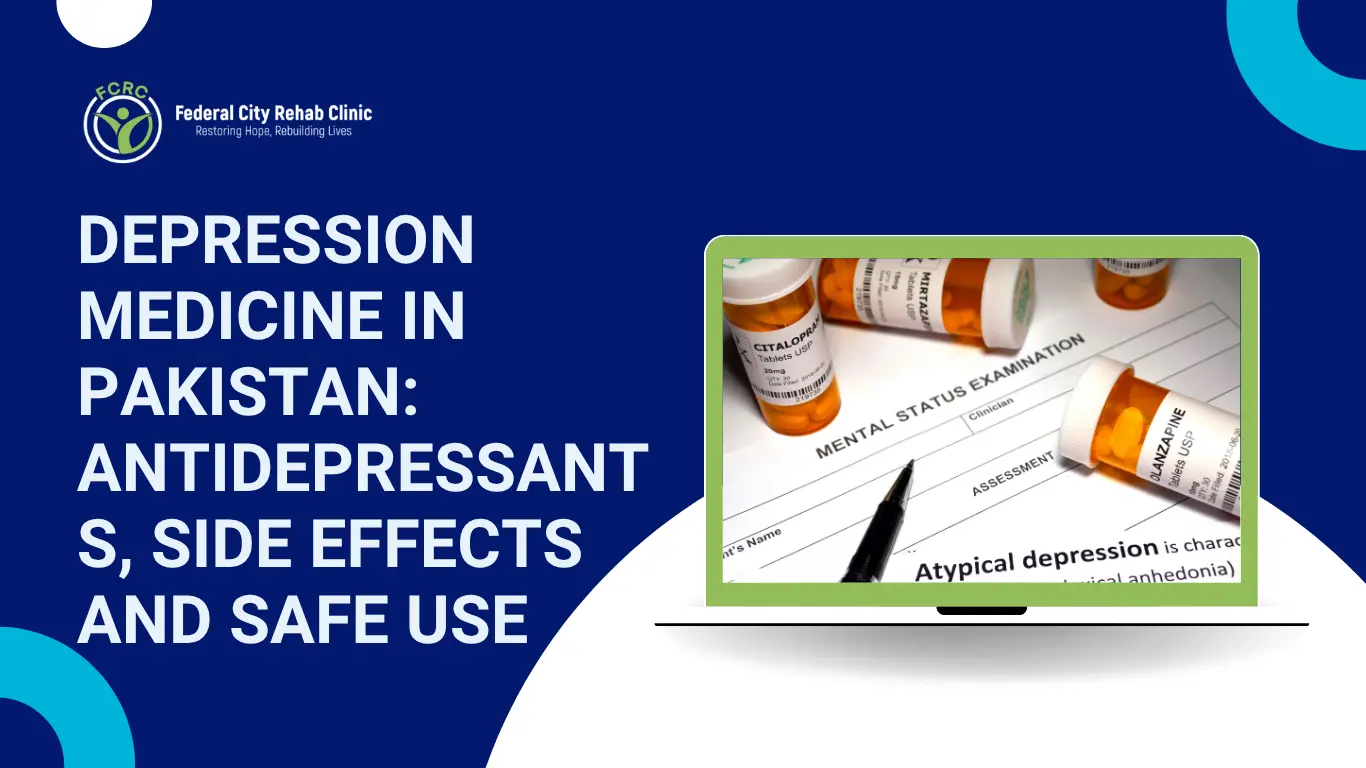
Antidepressants are medicines that treat depression by changing how brain chemicals such as serotonin and noradrenaline work. They are not addictive in the way that sleeping tablets or some anxiety tablets can be, they are not “happy pills,” and they do not change your personality. For many people with moderate to severe depression, they are one of the most effective parts of treatment, especially alongside therapy.
This guide explains the main types of depression medicine, what to expect, the side effects that matter and how to use them safely. It is general information. It does not replace a psychiatrist’s assessment, and it does not tell you which tablet to take. If you want to talk to someone now, Talk to our admissions team on WhatsApp. Your message is confidential.
Medicine is a medical decision, not something to buy over the counter
In Pakistan, tablets for depression are often bought from a pharmacy on a friend’s advice, an old prescription or a name seen online. This is risky for three reasons:
- The right medicine depends on your symptoms, your age, other illnesses, other medicines and sometimes your family history. What worked for a neighbor may not suit you.
- Some conditions that look like depression, such as bipolar disorder, can be made worse by an antidepressant taken alone. A psychiatrist checks for this first.
- Stopping or switching without advice can cause withdrawal symptoms or bring the depression back.
Take depression medicine only after an assessment and only as prescribed. Our Psychiatrist in Islamabad page explains what a first visit involves.
How do antidepressants work?
Depression is linked to changes in how nerve cells in the brain communicate. Antidepressants adjust the levels or activity of chemical messengers, mainly serotonin and noradrenaline, over days and weeks. That slow change is why the benefit is gradual, and why feeling better is usually followed by a period of staying on the medicine so depression does not return.
Main types of antidepressants
Doctors choose a class and then a specific medicine. The names below are generic names, meaning the active ingredient. Brand names differ between companies, so always look for the generic name on the packet and ask your doctor or pharmacist to confirm it.
SSRIs (selective serotonin reuptake inhibitors). Usually the first choice because they are generally well tolerated. Examples include sertraline, escitalopram, citalopram, fluoxetine, paroxetine and fluvoxamine. They are also used for anxiety, panic and OCD.
SNRIs (serotonin and noradrenaline reuptake inhibitors). Examples include venlafaxine and duloxetine. They may be used when an SSRI has not worked, or when pain or fatigue is part of the picture.
Other newer medicines. These include mirtazapine, which can help sleep and appetite, and bupropion, which works on different chemicals.
Tricyclic antidepressants. An older group, including amitriptyline and clomipramine. They can work well but cause more side effects, and they are more dangerous in overdose, so doctors use them with care.
Medicines that are not antidepressants but are often confused with them. Sleeping tablets and some anxiety tablets, such as benzodiazepines, calm you quickly but do not treat depression, and they can cause dependence. See our Xanax and Tramadol Addiction Treatment page. If you are taking tablets like these, tell your psychiatrist, and do not stop them suddenly.
Your psychiatrist may combine an antidepressant with therapy, add a second medicine or change the plan if the first choice does not help enough.
How long do antidepressants take to work?
Do not expect an effect overnight. Both the NHS and NIMH describe a gradual response: some change in sleep, appetite or energy may appear in the first one to two weeks, and the full benefit often takes up to eight weeks. Mood usually improves after sleep, appetite and energy do.
The NHS advises that people are usually asked to continue for at least six months after they feel better to lower the risk of depression coming back. Your psychiatrist decides the right length for you.
If you feel no benefit after several weeks, tell your doctor. Do not stop on your own. A different dose or medicine may be needed, and that is a normal part of treatment, not a failure.
Common side effects
Many side effects are mild and ease within the first two weeks. They differ by medicine, but can include:
- Nausea or stomach upset
- Headache
- Dry mouth
- Drowsiness or, for some people, trouble sleeping
- Feeling jittery or restless early on
- Changes in appetite or weight
- Sexual side effects, such as reduced desire
Tell your doctor about any side effect that bothers you. There are often simple fixes, such as changing the time of day you take it or changing the medicine. Do not suffer in silence, and do not stop abruptly.
Watch closely in the first weeks. Medicine agencies note that some people, especially children, teenagers and adults under about 25, may have more suicidal thoughts early in treatment or after a dose change. If you or someone you care for feels worse, becomes very agitated, or has thoughts of self harm, contact the doctor straight away or go to the nearest emergency department. Family members can help by noticing changes and speaking up.
Safe use: the rules that matter most
- Take it exactly as prescribed. Do not double doses, skip doses or share your tablets.
- Do not stop suddenly. Abrupt stopping can cause dizziness, headaches, sweating, irritability, “electric shock” sensations and a return of depression. Your doctor reduces the dose slowly over weeks or months.
- Be honest about alcohol and other substances. Alcohol, sleeping tablets, painkillers and drugs can reduce the benefit and add risks. If substance use is part of the picture, see our Dual Diagnosis Treatment page.
- Tell your doctor about every other medicine, including herbal products and supplements, because some combinations are unsafe.
- Tell your doctor if you are pregnant, planning pregnancy or breastfeeding. Do not stop on your own, but ask for advice early.
- Keep follow up appointments. Medicine often needs adjusting.
- Do not judge it too early. The first two weeks are often the hardest, and the benefit comes later.
Are antidepressants addictive?
Antidepressants do not cause the craving and compulsive use seen with addictive drugs. But stopping them suddenly can cause withdrawal like symptoms, which is why they should be reduced gradually. This is different from the dependence that can develop with benzodiazepine sleeping and anxiety tablets, which are a bigger concern in Pakistan.
Medicine is only one part of treatment
For many people, medicine works best alongside therapy, sleep, daily activity and support. Our psychologists offer Counseling and Therapy, including CBT, and our Family Support Program helps relatives understand depression and support recovery. After an episode, Relapse Prevention planning helps lower the chance of it returning.
You can read about how we assess and treat depression on our Depression Treatment page, or take our Free Mental Health Self Check, which uses the PHQ-9 questionnaire. It does not give a diagnosis, but it can help you decide whether to book a visit.
When to see a psychiatrist
Book an appointment if:
- Low mood, loss of interest or hopelessness has lasted more than two weeks
- You are already taking tablets and are not sure they are working
- You have side effects that worry you
- You want to stop or change your medicine
- You are using alcohol or tablets to cope
- Someone close to you has noticed you are not yourself
If you or someone near you is in immediate danger or is thinking of self harm, go to the nearest emergency department now. Do not wait for an appointment.
Frequently Asked Questions
What is the best medicine for depression?
There is no single best medicine. The right one depends on your symptoms, health, other medicines and how you respond. A psychiatrist chooses after an assessment.
Which antidepressant has the fewest side effects?
It differs by person. SSRIs are generally well tolerated and are often the first choice, but any medicine can cause side effects. Your doctor can adjust the plan if they trouble you.
Can I buy depression tablets without a prescription in Pakistan?
Antidepressants are prescription medicines and should be taken only on a doctor’s advice, even if some pharmacies sell them without one. Taking them without an assessment is unsafe.
How long should I take antidepressants?
Usually for several months after you feel better, and longer for some people. Your doctor decides, and reduces the dose gradually when it is time to stop.
Can antidepressants make depression worse at first?
Some people feel restless, anxious or sleep poorly in the first weeks. A small number, especially young people, may have more suicidal thoughts early on. Contact your doctor if you feel worse.
Are antidepressants safe to take with anxiety medicine?
Often they are used together, but some combinations need care. Tell your doctor about all your tablets.
Can I drink alcohol while taking antidepressants?
It is best to avoid it. Alcohol can worsen depression and add side effects.
What if the first medicine does not work?
This is common. A psychiatrist may adjust the dose, change the medicine, add therapy or add a second medicine.
Are antidepressants addictive?
They do not cause craving or dependence in the way addictive drugs do, but stopping suddenly can cause withdrawal symptoms, so they are reduced slowly.
Can antidepressants be used for anxiety and OCD?
Yes. Several antidepressants, especially SSRIs, are also used for anxiety, panic and OCD.
Get In Touch
You do not have to work out medicine on your own. Talk to our admissions team on WhatsApp and we will help you book a private appointment with a consultant psychiatrist.